




Variable Frequency Drives (VFDs) play a critical role in modern industrial automation. From pumps and fans to conveyors and precision machinery, selecting the right drive directly impacts energy efficiency, motor lifespan, and overall operational stability.
In 2026, manufacturers are increasingly looking for VFD solutions that balance high performance, reliability, and long-term cost-effectiveness. This guide will help you understand what defines a high-performance VFD, how to evaluate cost-effectiveness, and which solutions are worth considering for industrial applications.
What Makes a High-Performance VFD?
A high-performance Variable Frequency Drive goes beyond basic speed regulation. It delivers precision motor control, fast dynamic response, and stable torque output under varying load conditions.
Key characteristics include:
1. Advanced Control Algorithms
Modern drives typically use:
V/F Control for standard applications
Sensorless Vector Control for higher torque precision
Closed-loop Vector Control for demanding industrial systems
Vector control technology ensures stable torque even at low speeds, which is essential in heavy-load or precision environments.
2. High Starting Torque & Low-Speed Stability
Industrial machinery often requires strong starting torque. A high-performance VFD should deliver reliable torque output at low frequencies without instability.
3. Fast Dynamic Response
Applications like material handling or machining require rapid acceleration and deceleration. Drives with optimized vector algorithms provide smoother transitions and improved system responsiveness.
4. Comprehensive Protection Functions
Look for built-in protections such as:
Overcurrent and overload protection
Phase loss detection
Overheat protection
Ground fault monitoring
These features prevent costly downtime and protect connected equipment.
How to Choose a Cost-Effective Variable Frequency Drive
Cost-effectiveness is not about choosing the lowest-priced model. Instead, it involves evaluating total lifecycle value.
Here are key evaluation factors:
1. Energy Efficiency
Energy savings often justify the investment. Drives with automatic voltage optimization and built-in PID control reduce unnecessary energy consumption, particularly in pump and fan systems.
2. Reliability and Durability
Industrial environments can be harsh. Drives should feature:
Efficient cooling systems
Robust hardware design
Protective coatings against dust and humidity
A durable VFD minimizes maintenance frequency and replacement costs.
3. Ease of Integration
Check compatibility with:
PLC systems
Industrial communication protocols (e.g., Modbus)
Existing motor specifications
Simplified installation and configuration reduce commissioning costs.
4. Manufacturer Support
Technical documentation, warranty coverage, and after-sales service significantly influence long-term ROI.
Top Recommended Variable Frequency Drives for Industrial Applications
When evaluating high-performance and cost-effective VFD solutions in 2026, several criteria matter: vector control capability, energy efficiency, robust construction, and application flexibility.
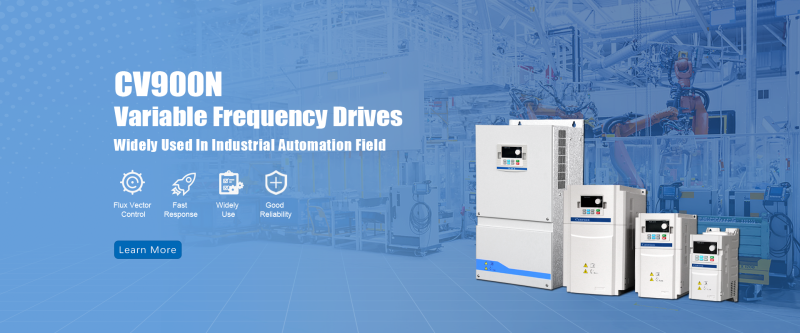
One example that aligns with these requirements is the CV900N Series High-Performance Vector Frequency Drive from Canroon.
The CV900N Series is designed for demanding industrial automation scenarios and offers:
Advanced sensorless vector control
Stable torque performance across wide speed ranges
Integrated PID functionality
Comprehensive protection mechanisms
Wide power range suitable for small and large motors
Its modular design and optimized cooling structure enhance reliability in continuous-duty environments such as:
Pump and fan systems
Conveyors and logistics lines
HVAC installations
Machine tools
Rather than focusing solely on price, drives like the CV900N emphasize balanced performance, energy efficiency, and durability — key factors in long-term operational cost control.
Common Mistakes When Selecting a VFD
Choosing the wrong drive can lead to efficiency loss and unexpected downtime. Avoid these common mistakes:
❌ Selecting Based Only on Price
Low-cost drives may lack advanced control features or robust protection, leading to higher maintenance costs.
❌ Ignoring Load Characteristics
Different applications (constant torque vs. variable torque) require different control strategies.
❌ Underestimating Environmental Conditions
Dust, heat, and vibration significantly affect lifespan. Always match the drive’s protection level to the operating environment.
❌ Overlooking Future Scalability
Ensure the drive supports expansion, communication modules, and system upgrades.
Final Recommendation
Selecting a high-performance, cost-effective Variable Frequency Drive in 2026 requires balancing technology, reliability, and lifecycle value.
Look for solutions that provide:
✔ Advanced vector control
✔ Stable torque and dynamic response
✔ Integrated protection systems
✔ Energy optimization features
✔ Industrial-grade durability
Drives such as the CV900N Series demonstrate how modern VFD technology can combine precision motor control with long-term cost efficiency — making them suitable for a wide range of industrial automation projects.
When properly selected and configured, a high-quality VFD is not just a motor controller — it becomes a strategic component for energy savings, operational stability, and production efficiency.
FAQ
Q1: What is a Variable Frequency Drive (VFD)?
A: A VFD, also known as an AC drive or frequency inverter, controls the speed and torque of an AC motor by varying the voltage and frequency. It improves energy efficiency, extends motor life, and enhances process precision.
Q2: What makes a VFD high-performance?
A: High-performance VFDs offer features such as vector control, stable low-speed torque, fast dynamic response, and built-in protection functions. These ensure smooth operation even under demanding industrial loads.
Q3: How do I choose a cost-effective VFD?
A: Evaluate total lifecycle value rather than just price. Look for energy efficiency, reliability, integration flexibility, protection features, and manufacturer support. The goal is to minimize operating and maintenance costs over time.
Q4: Why choose the Canroon CV900N Series?
A: The CV900N Series combines advanced sensorless vector control, PID functionality, wide power range, and robust design. It is ideal for industrial applications like pumps, conveyors, HVAC systems, and machine tools, offering both performance and long-term cost-effectiveness.
Q5: What common mistakes should I avoid when selecting a VFD?
A: Avoid choosing drives based solely on price, ignoring load characteristics, underestimating environmental conditions, or selecting drives that lack future scalability. Correct selection ensures optimal efficiency and reliability.
Q6: Can VFDs reduce energy costs?
A: Yes. By adjusting motor speed to actual demand, VFDs like the CV900N minimize unnecessary energy consumption, particularly in fan, pump, and HVAC applications, which can result in significant cost savings.
Q7: Are VFDs suitable for harsh industrial environments?
A: High-quality VFDs feature robust hardware, protective coatings, and efficient cooling to withstand dust, heat, and vibration. The CV900N Series is engineered for continuous operation in such conditions.
Previous:
Next:
Sign up for updates