





Are long furnace cycles and high energy bills slowing down your production line? Old tempering methods need hours of heat and use a lot of power. An induction tempering machine offers a smarter way. This exact, electromagnetic heat treatment process makes hardened steel tougher and more flexible. You gain speed, control, and efficiency.
The induction tempering process gives real, measurable gains. Short-time tempering using induction boosts impact toughness by over 43% at high strength levels, compared to the usual 1-hour tempering. When toughness stays the same, strength goes up by more than 0.5 GPa.
This article looks at induction tempering technology, its main benefits, how to choose equipment, and real-world uses. You will learn how this modern method changes manufacturing.
Key Takeaways
Induction tempering heats steel in seconds, not hours. It uses energy with 98% efficiency.
Each part gets its own heating cycle. This makes sure every piece is evenly hard and strong.
Induction tempering fits right into production lines. It gets rid of batch scheduling slowdowns.
Heating only one spot reduces warping. The middle stays cool and steady.
The right machine depends on the material, frequency, and power settings. Canroon provides proven recipes.
Understanding the Induction Tempering Process
The Principle of Electromagnetic Heating
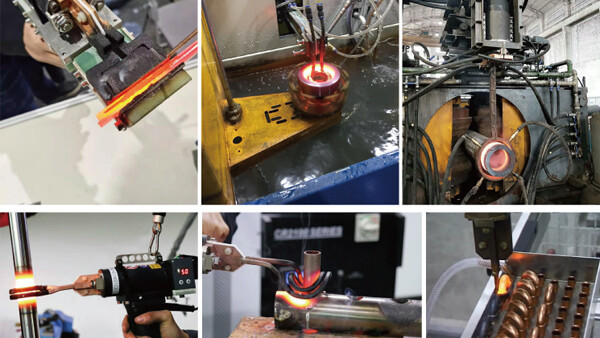
Induction heating works through a fascinating physical principle. You place a steel workpiece inside a coil carrying alternating current. This current creates a rapidly changing magnetic field around the part. That field induces circulating electric currents—called eddy currents—within the metal. These currents encounter electrical resistance as they flow, converting electrical energy directly into heat. The metal becomes its own heat source, generating warmth from within rather than absorbing it from outside.
Two distinct mechanisms produce this internal heating. The table below summarizes how each one works:
Together, these effects produce rapid, efficient heating. The frequency of your current alternation determines how deeply the heat penetrates. Lower frequencies allow deeper heating, while higher frequencies concentrate energy near the surface. For ferromagnetic carbon steel, frequencies between 1–10 kHz provide deep penetration suitable for through-tempering thick sections. Non-magnetic materials like stainless steel require higher frequencies (50–400 kHz) to compensate for their lower resistivity. This frequency-penetration relationship follows the skin effect: penetration depth decreases as frequency increases. You select the frequency based on the component's thickness and the tempering depth you need.
How It Differs from Traditional Furnace Tempering
The induction tempering process differs dramatically from conventional furnace methods. A furnace heats an entire batch uniformly, treating every workpiece identically regardless of individual variations. You wait hours for the chamber to reach temperature, then hours more for parts to soak. This approach consumes enormous energy and offers little control over individual pieces.
Induction tempering changes this completely. You process each workpiece individually, tailoring the heating cycle to that specific part. The induction tempering process completes in tens of seconds to a few minutes, compared to several hours in a furnace. This speed transforms production planning. You no longer schedule around long batch cycles. Instead, you integrate induction heating directly into your production line, treating parts as they move through manufacturing.
This individual control delivers superior quality. Each part receives exactly the temperature and duration it needs, ensuring consistent hardness and toughness. You can adjust parameters for different components without waiting for a furnace to cool and reheat. The induction heat treatment process also integrates seamlessly with induction hardening and induction quenching stations. You can combine these operations in a single machine, saving floor space and reducing handling time. This precision makes induction tempered steel ideal for demanding applications where consistency matters. The process gives you repeatable results, part after part, without the variability of batch processing. You gain speed, efficiency, and quality control that traditional furnaces simply cannot match.
Advantages of Induction Tempering Machines
Unmatched Energy Efficiency and Speed
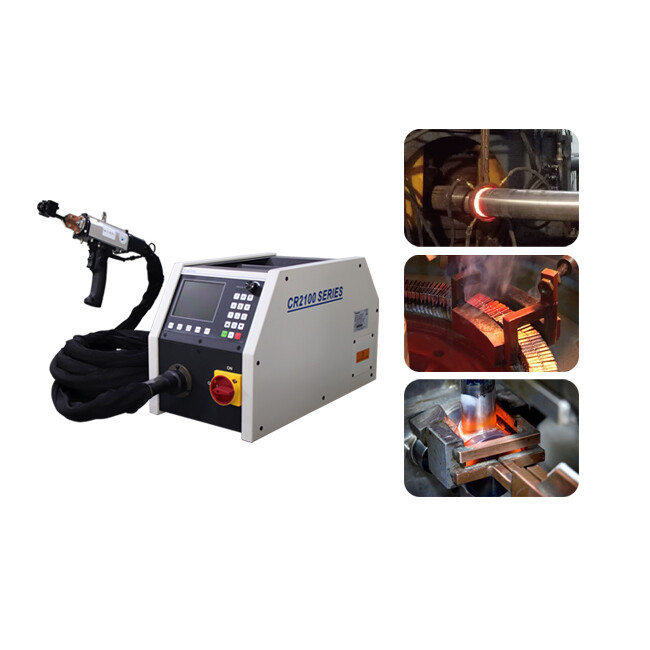
You gain immediate savings with an induction tempering machine. Canroon systems achieve up to 98% energy efficiency. Traditional furnaces waste heat on the chamber, the atmosphere, and the fixtures. Induction delivers energy directly into the workpiece. The metal becomes its own heat source. You eliminate standby losses and idle heating cycles.
Speed transforms your production schedule. Consider a 3-inch AISI 4140 steel shaft. A single-shot induction hardening recipe heats the part at full power for 6.5 seconds, then spray-quenches for 60 seconds, followed by air cooling. A preheat recipe uses 60 seconds at one-tenth power, then 3 seconds at full power, then 60 seconds of spray quenching. Both complete the entire hardening cycle in roughly 1–2 minutes per piece. A conventional carburization furnace requires hours for the same job. The induction tempering process applies the same rapid heating mechanism. You shorten tempering from hours to minutes because heat goes directly and locally to the hardened surface. You never wait for a large chamber to reach temperature.
Induction hardening is much faster than conventional heat treatment methods. The rapid heating and cooling cycles significantly reduce process time, increasing throughput and efficiency in production. This principle applies equally to induction tempering, where the same rapid induction heating mechanism shortens the tempering cycle from hours in a furnace to minutes, because the heat is applied directly and locally to the hardened surface rather than slowly raising the temperature of the entire component.
This speed increases your throughput. You process more parts per shift. You reduce work-in-progress inventory. You respond faster to customer orders. The induction tempering cycle fits directly into your existing line, so you eliminate the bottleneck of batch scheduling.
Precision Control and Seamless Integration
You achieve induction tempering quality that batch furnaces cannot match. Each workpiece receives its own thermal cycle. You control temperature and duration for every individual part. This individual treatment ensures consistent hardness and toughness across your entire production run. Once you validate a process recipe, every part receives the same treatment. This repeatability is critical for high-volume lines where part-to-part variation is unacceptable.
Precision: Induction heating is the most energy-efficient and precise method for applying heat during the heat treating process. Power delivery can be adjusted in real time, and temperature profiles can be tightly controlled zone by zone across the length of the part. This level of precision is extremely difficult to achieve in a batch furnace environment.
Repeatability: Reproducible uniformity of the heat treatment process and its metallurgical results is one of the core strengths of induction heating. Once a process recipe is established and validated, every part receives the same thermal treatment. This consistency is critical for high-volume production lines where part-to-part variation cannot be tolerated.
The induction heat treatment process also controls distortion. Only a small percentage of the component's mass reaches critical transformation temperatures. The unheated core acts as a rigid frame that resists warping. This dimensional stability minimizes post-treatment machining. You meet tight tolerances routinely.
Distortion Control: Localized thermal management keeps the core cool and stable, reducing warping and deformation.
Production Efficiency: Compact induction equipment fits directly into automated lines. Robotic arms load parts individually, index them through a vertical scan machine, quench, and advance them to assembly within seconds.
Localized Heating: You selectively harden specific high-wear areas while leaving adjacent features soft. Furnace treatments require masking or plating to protect zones, adding labor and cost.
The induction hardening and induction quenching stations integrate seamlessly. Canroon combines hardening and tempering in a single machine. You save floor space and reduce handling time. The induction tempering process works inline with your existing operations. You eliminate work-in-progress bottlenecks. You gain a complete, automated solution that improves both quality and productivity. This hardness induction tempering approach delivers consistent results for demanding applications. You achieve superior induction tempering outcomes with less energy, less time, and greater control.
Choosing Your Induction Tempering Machine
Critical Process Parameters to Consider
Pick the right induction tempering machine; know your material first. For AISI 4140 steel, the induction tempering temperature directly sets the final hardness. The table below shows this relationship:
If you need 40 HRC, aim for 400°C. Your induction tempering system must keep this temperature uniform across the entire workpiece.
Other things affect the induction tempering process. Frequency sets the penetration depth. For a camshaft needing 5.5–8.5 mm case depth, pick 4.5–5.5 kHz. Power settings around 90–100 kW give energy for this shape. The gap between inductor and workpiece is important. A 0.5 mm gap change can alter case depth a lot. You must keep the spacing the same throughout the cycle.
Scan rate directly controls case depth. Slower scanning gives more depth but risks early cooling. Quench delay must be exact to avoid soft spots. A short wait of 0.5–2.5 seconds before quenching makes temperature more even. Rotation speed must be high enough to smooth out electromagnetic effects without messing the quenchant.
Evaluating System Configurations and Support
Modern induction tempering equipment comes in flexible setups. You can combine induction hardening and induction quenching stations with tempering in one machine. This saves floor space and cuts the handling time between steps. Canroon offers complete systems that blend these steps smoothly.
Consider your production flow carefully. Separate temper stations work well for some operations. Combined stations suit high-volume lines where parts move continuously. Canroon offers both options, matching the system to your specific needs.
Support is as important as hardware. Canroon gives lab-tested heating performance made for your parts. You get tested recipes before installation. Ongoing support includes coils, spare parts, and regular maintenance. Flexible service rental options let you add capacity during busy times. This full approach gives the most uptime and steady quality for your induction heating work.
The induction heating system you choose must deliver repeatable results. Canroon's engineering team adjusts every setting for your part's shape. You gain a partner who knows the induction tempering process from start to finish.
Induction Tempering Applications Across Industries
Automotive and Heavy Machinery Components
Induction tempering is used in many vehicle and heavy machinery parts. Steel shafts, bars, and joints with hardened surfaces depend on this process. The automotive industry needs consistent quality for every part. Gears, sprockets, and chains also gain from induction heat treatment. You can control the case depth with precision. This gives wear resistance exactly where it is needed. The core stays strong and flexible.
Induction hardening followed by induction quenching creates the hard outer layer. Induction hardening heats only the surface area. Induction quenching cools it fast to form martensite. The induction process gives you exact control over the hardened layer. Then you use tempering to reduce stresses and set the final hardness. You treat each part on its own. This removes batch differences. Every gear tooth gets the same heat cycle. Every shaft journal meets the same standard. The outcome is a dependable part that works well under heavy loads.
Heavy machinery parts often face harsh conditions. Excavator pins, crane hooks, and bulldozer sprockets must handle impact and wear. Induction heat treatment gives you the right mix of hardness and toughness. You adjust the process for each part's shape. This accuracy lowers scrap rates and boosts performance in the field.
Tube, Pipe, and Specialized Manufacturing
The tube and pipe industry uses induction heating for steel parts that need hardening all the way through. You heat the full wall thickness evenly. This creates uniform mechanical properties along the tube's length. The induction tempering process finishes in seconds. You add it directly to the production line. No waiting for batch furnaces to finish their cycles.
Specialized manufacturing reaches other industries too. Medical devices need precise heat treatment. Surgical tools, orthopedic implants, and dental instruments benefit from induction heating. You control the temperature profile closely. This stops distortion and keeps tight tolerances. Cutting tools, punches, and dies last longer with targeted heat treatment.
The flexibility of induction equipment supports many industries. You change frequency, power, and scan rate for different materials and shapes. This makes the technology work for small specialty parts and large production runs alike. Whether you temper one prototype or millions of parts, the results stay the same. You gain an edge over competitors through speed, precision, and energy savings. That is why many manufacturers choose this technology for their work.
Induction tempering delivers a strategic upgrade for modern manufacturing. You gain speed, precision, and energy efficiency. Canroon's induction tempering machine provides a complete, integrated solution. It combines hardening and induction quenching in one system. This boosts productivity and quality. The induction tempering process works with induction quenching to deliver consistent results. It fits directly into your production line. This eliminates bottlenecks. You process parts individually. You control every cycle. Quality remains consistent across all workpieces. Evaluate your current tempering methods. Consider the potential for improvement. Contact Canroon for a consultation today. Our team analyzes your needs. We recommend the right induction heating systems. Transform your operations with induction technology.
FAQ
How long does induction tempering take compared to furnace tempering?
Induction tempering takes from tens of seconds to a few minutes. Furnace tempering takes several hours. You process each part one at a time. This speed lets you add tempering right into your production line, so you don’t have to wait for batch schedules.
Can induction tempering handle different steel grades?
Yes. You can change the frequency, power, and scan rate to match each material. Ferromagnetic carbon steel works well with 1–10 kHz frequencies. Stainless steel needs higher frequencies around 50–400 kHz. Canroon gives you tested recipes from the lab that are made for your specific parts and materials.
What is the typical energy savings with induction tempering?
Canroon systems can reach up to 98% energy efficiency. Induction heating puts energy straight into the workpiece. The metal becomes its own heat source. You get rid of the wasted energy from standby times and idle heating that happen in old furnaces.
Do I need separate machines for hardening and tempering?
No. Canroon has machines that do both hardening and tempering in one machine. You save space and cut down on handling time between steps. Separate temper stations can also work well for some production flows. Your choice depends on what you need for your production.
How does induction tempering improve part quality?
Each part gets its own heating cycle. You control the temperature and time for every piece. This gives steady hardness and toughness across all your parts. The local heating also lowers the chance of warping because the inside stays cool and stable.
Previous:
Next:
Sign up for updates