





A 380V three phase vfd changes power voltage and speed to run machines well. You get exact 3 phase motor control by shifting settings as needed. Every factory motor setup uses a variable frequency drive to manage speed and power smoothly during hard work.
Always check the Full Load Amperes on your motor label before buying parts. Horsepower numbers by themselves do not ensure safe electric performance. Matching real amp values stops surprise system shutdowns under heavy work. This vfd sizing guide keeps your gear dependable while protecting your total project money. Choosing the best vfd needs careful thought about electric, machine, and job needs.
Key Takeaways
Choose the size of your drive by checking the motor's full load amps on the label, rather than looking at its horsepower rating.
Match the drive control settings to steady or changing machine loads to save as much energy as possible.
Pick sensorless vector control drives so you can keep strong starting power and exact speed control.
Choose NEMA 4X or IP66 covers to keep electrical parts safe in wet or tough conditions.
Keep the inside of the cabinet cool to make the important parts inside, called electrolytic capacitors, last twice as long.
Electrical Sizing for 380V Three Phase VFD Systems
Matching Motor Amperage and Full Load Ratings
Always pair a 380V three phase vfd with an equal three-phase motor. Modern drives handle power setups from 0.4kW to 400kW for pumps, fans, and cnc machine tools. Check motor nameplate amps before buying any gear. Every vfd must safely handle top electric currents.
Wrong electrical ratings will break your equipment during long job runs. Running a 380V motor at 240V lowers air-gap flux and cuts total torque. Quick PWM switching from a vfd creates harmful voltage spikes at wire terminals. The chart below shows drive mismatch problems.
Check a sizing reference table to confirm safe current bounds and guard industrial work.
Native 380V Supply vs Single-Phase Step-Up
True 380V power gives high working efficiency for heavy plant machinery. Using a three phase vfd on big fans cuts energy use up to 50% over fixed-speed setups. A step-up converter with SVPWM works at an efficiency level of ≥94%. Still, direct power links deliver better reliability for tough factory jobs.
VFDs cannot boost voltage levels, so they never turn low incoming power into higher output power. A VFD can take in higher voltage and send out lower voltage, but your motor draws more current for equal horsepower.
Phase conversion setups build extra limits for sensitive cnc units running on a vfd.
Built only for simple motor loads
Made to power a single load output
Bad for complex machines with multiple controls
Chopped square wave signals create harmful harmonic stress
Might create unwanted electrical noise
Needs extra line filters for full motor protection
A real vfd gives superior power control. True utility power promises steady 3 phase motor control for all your systems.
Selecting the Best VFD Control for Canroon Drives
Constant vs Variable Torque Applications
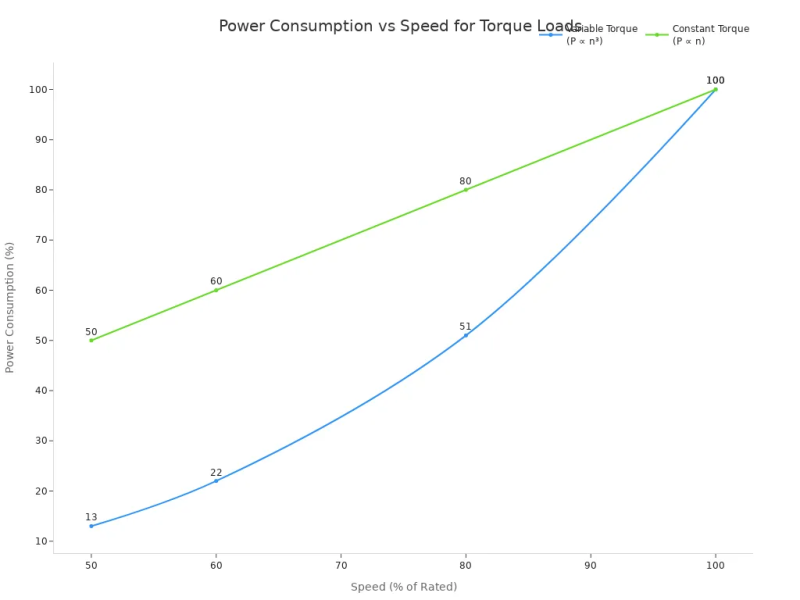
You need to pick drive controls that match your exact mechanical machine load. Variable torque jobs like centrifugal pumps need less current when running slow. Power use changes with a cubic formula linked to machine speed (P ∝ n³). Dropping motor speed to 80% cuts your power demand to 51%. A variable torque vfd improves pump work while building an energy-saving system. Good power management lowers daily running costs through long plant shifts.
Constant torque setups need steady turning power across every running speed. Conveyors and cnc machines require full motor shaft torque even when moving slowly. Dropping motor speed to 50% cuts your power use directly to 50%. Picking the best vfd profile stops sudden motor stalls and dangerous heat buildup.
Sensorless Vector Performance in Canroon Drives
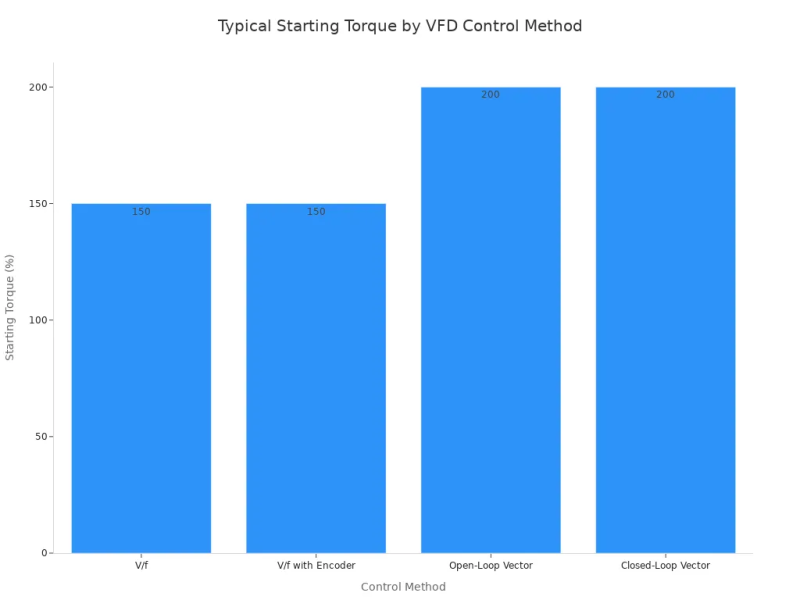
Canroon drives use smart sensorless vector code to measure internal rotor flux. The vfd checks current and voltage data to calculate motor slip constantly. This method keeps 200% rated motor torque down to ~1 Hz without encoders. Your vfd changes frequency right away to keep equipment working stably. You get smooth low-speed output for heavy plant tools and cnc gear. Sensorless vector systems deliver exact 3 phase motor control across wide speed ranges.
Basic V/f settings give only 150% starting torque down at 3 Hz. Open-loop vector modes boost starting torque up to 200% at 0.3 Hz. This extra power helps proper energy optimization across tough factory lines. Buying the best vfd with vector power gives steady motor output balance. Picking the best vfd setup improves your three phase vfd system for hard tasks.
Enclosure Ratings and Environment Protection
IP and NEMA Standards for Harsh Industrial Operations
You must protect your variable speed drive against tough plant conditions. Water sprays, airborne dust, and chemicals quickly ruin sensitive electronic circuits. Using a generic enclosure in a aggressive environment increases equipment failure rates by 3–5 times. Proper protection paths and shielding extend the operating life of your power units.
For severe chemical exposure or high humidity, selection of the right cabinet standard ensures uninterrupted plant operations.
For corrosive, marine, or chemical environments, the required enclosure rating is NEMA 4X / IP66, and the material should be 316 stainless steel or GRP (Glass Reinforced Polyester).
Thermal Management and Cooling Strategy
Sealed protective cabinets create real heat management challenges for your 380V drive. A watertight NEMA 4 cabinet blocks normal air movement. This trapped heat raises internal temps, forcing you to install active cooling systems like heat exchangers or air conditioners.
Internal heat alters drive performance by degrading critical components over time. Thermal stress targets internal electrolytic capacitors directly. Heat speeds up electrolyte drying inside these parts.
You must clean drive heat sinks regularly to stop thermal trips. Good cabinet air movement protects every motor and vfd on your line. Placing units away from direct heat sources saves cooling energy while maintaining continuous torque output. Proper cooling designs protect your motor investment and maintain steady daily output.
Accessories for Your Variable Frequency Drive
Line Reactors and EMI Filters
Adding proper input protection extends drive hardware life and stops electrical noise. You need line reactors and electromagnetic interference filters to protect sensitive industrial equipment. Line reactors absorb voltage surges from the power grid. They also reduce current harmonics before electrical spikes enter your system. High switching frequencies in a vfd create high-frequency noise on power lines.
IEC 61800-3 is generally regarded as the core EMC standard for adjustable-speed electrical power drive systems, addressing emission and immunity requirements.
Installing proper filter components ensures continuous regulatory compliance and clean power distribution.
Dynamic Braking Resistors and Communication Options
Heavy machinery creates massive kinetic energy during rapid deceleration. A dynamic braking resistor dissipates surplus energy from your motor as thermal output. High-inertia loads require accurate sizing steps to stop overvoltage trips during fast stopping cycles.
Gather Specifications: Identify motor HP, voltage class, full-load current, and RPM from the nameplate. Confirm the VFD has an internal braking chopper.
Calculate Total Inertia: Determine the total inertia (
J_total) reflected to the motor shaft, which is critical for high-inertia loads.Calculate Peak Braking Power: Use the formula
P_peak = 0.5 * J_total * (omega_1^2) / t_decel, whereomega_1is the initial angular velocity.Calculate Average Power: Determine
P_avg = P_peak * Duty Cycle, where Duty Cycle accounts for the frequency and duration of stops.Select Resistor: Choose a resistor with a resistance value within the drive's specified band and a continuous power rating (
P_cont) greater than or equal to 1.5 times the calculatedP_avgto provide a safety factor.Verify Construction: Ensure the resistor is of low-inductance construction (e.g., single-layer or bifilar wirewound).
Canroon drives support Modbus/RS485 communication protocols for modern industrial automation networks. This interface allows simple control integration across plant equipment.
Managing Budget and Avoiding Common VFD Pitfalls
Motor Insulation and Base Frequency Setup
You need to guard motor parts when linking a variable speed unit to electrical power. Rapid energy pulses from a controller generate heavy heat on internal wires. Regular motors frequently break down quickly if they lack strong protective coatings.
Upgrading parts stops common shopping errors that wreck initial budget targets. You must complete key protective checks for every repair job.
Choose Class F internal wrapping to protect every rebuilt machine coil.
Use Class F shielding to simplify shop supplies and protect future operations.
Check the metal tag to see if tough work settings require Class H shielding.
Selecting wrong base speed settings also triggers bad motor heat problems.
A Class F motor with 105 K rise over 40 °C ambient can sustain a 145 °C frame surface temperature; above that, expect a 4–8× reduction in insulation life per NEMA MG-1 Part 14.
Bad frequency choices make the controller over-magnetize the metal body. Power draws around 90–110% show the system is pushing extra magnetic force to keep turning, creating dangerous heat levels.
Evaluating Total Cost and Canroon Model Options
Vague setup plans cause massive cost jumps when putting drives to work. You prevent classic shopping errors by dividing job tasks clearly during early planning meetings.
Handling total spending demands a smart price group check across drive models. A cheap starting tag might mask huge long-term power bills. Getting an advanced controller controls your money goals through real energy reduction features. High-end units deliver precise power tracking during long factory shifts.
Picking top drive choices protects your project money. Industry lists showcase the Canroon CV900N with big names like Danfoss, Delta, and Mitsubishi as a great pick for 380V power systems. Buying ideal controller options provides strong build quality for fair price levels. Checking price levels ensures you buy reliable gear that fits your exact budget goals.
You protect your factory by using a easy tool check list.
Check motor Full Load Amperes to ensure exact vfd sizing. Studies show up to 30 percent of vfd users size gear wrong, causing big motor power problems.
Verify moving torque needs for clear 3 phase motor control.
Choose easy setup screens to stop daily worker errors.
Check total cost goals against initial buying price choices.
Talk to factory help or use tool sizing programs before finishing your machine spending plan. Picking the best vfd needs balancing drive cost against long time energy savings. Buying a good three phase vfd keeps your project money safe while giving steady factory work.
FAQ
How do you select the best vfd for your budget?
First, review your motor full load amperes. Next, calculate required drive features to prevent an unexpected price jump. Picking standard controller models helps you stay within your budget while ensuring optimal machine performance.
Why must you size a vfd by motor full load amperes instead of horsepower?
Horsepower ratings alone do not guarantee total electrical safety. Motor current draws change based on load and internal winding designs. Matching full load amperes stops sudden overcurrent trips and protects power components from thermal damage.
How does improper base frequency setup affect motor operating costs?
Setting a wrong base frequency forces the drive to over-magnetize the metal motor frame. This extra magnetic force creates severe overheating and fast insulation breakdown. Proper setup cuts energy waste and controls your long-term maintenance price.
Can a single phase supply safely run a three phase motor drive?
You can use phase conversion systems for simple machinery setups. However, direct utility power gives better efficiency for heavy industrial equipment. True three-phase connections lower electrical noise, keeping your operating budget stable without extra line filter components.
What enclosure protection rating fits a wet industrial site without breaking your budget?
Pick a NEMA 4 or NEMA 4X cabinet for wet areas with direct hose-down risks. NEMA 4X gives strong corrosion resistance in harsh chemical environments. Choosing the right cabinet design prevents early drive failure and protects overall plant safety.
Previous:
Next:
Sign up for updates