




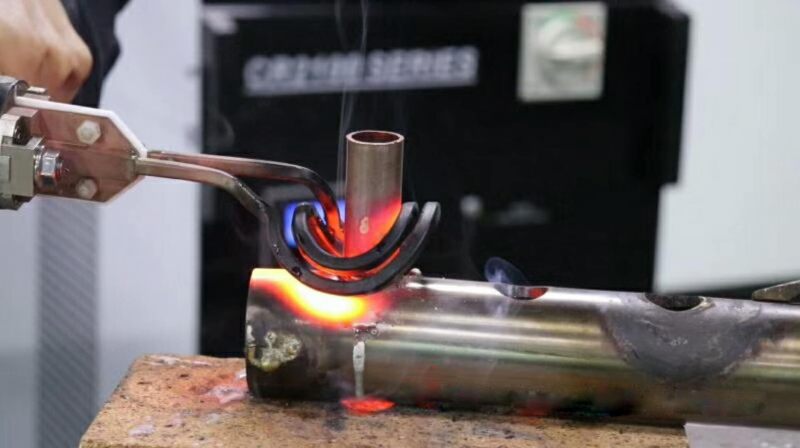
Picking the right frequency helps your project succeed.
Here is an easy general rule. High frequency heats thin parts and surfaces. It targets small, exact spots. Low and medium frequency heats deep down. It warms large metal pieces evenly all through.
Choosing the best frequency helps your induction heating machine work. It speeds up your work time. It saves power and makes better products. You stop wasting energy. You also protect metals from bad defects. Just match the frequency to your metal size.
Key Takeaways
High frequency heats thin outer surfaces very fast.
Low frequency pushes heat deep into thick metal.
Matching frequency to metal size stops part bending.
Induction heating saves power. It lowers workshop costs.
Induction Heating Frequencies and Skin Depth
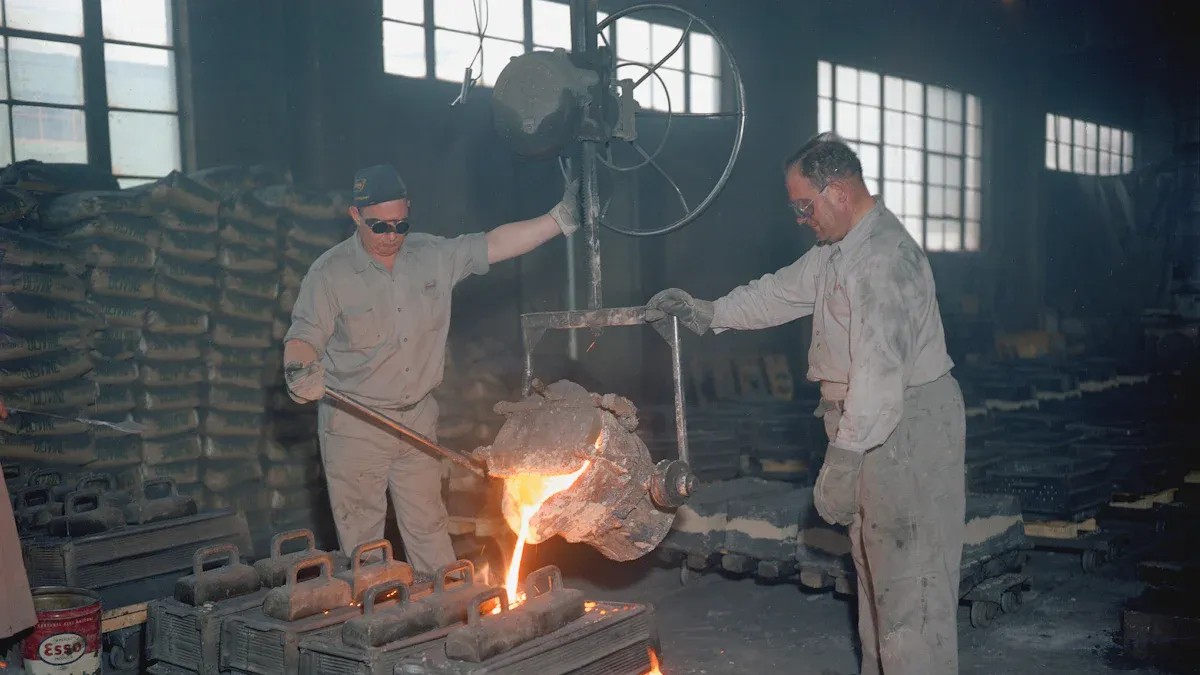
Learning furnace basics helps you pick tools. Electricity makes heat inside metal pieces.
Physics of Induction and Eddy Currents
Current in a coil makes a magnetic field. This field creates round currents in metal.
Current flows in a copper coil.
The coil creates a magnetic field.
The field causes internal eddy currents.
Metal resistance creates heat ($H = I^2 R$).
💡 Key Takeaway: Metal heats up from the inside. The coil touches nothing.
How Frequency Dictates Penetration Depth
Frequency controls heat depth inside metal. This depth is the skin depth ($delta$).
Current drops fast below the surface ($J(x) = J_0 e^{-x/delta}$).
Higher Frequencies: Keeps current near the outer surface.
Lower Frequencies: Goes deep inside thick metal pieces.
Surface vs Core Heating Principles
High frequencies heat outer metal fast. Low frequencies run under 50 kHz. They heat thick bars very deep. Surface heat then moves inside slowly.
Soak time gives you good control. Power control ensures steady heat flow.
High-Frequency Induction Heating Systems
Characteristics and Operating Ranges
High-frequency tools warm outer metal fast. They send power using strong currents.
You get rapid heating very fast. Current stays on the outer skin.
An induction heating machine helps thin metal parts.
Applications in Brazing and Surface Hardening
Brazing uses high frequency very often. Surface hardening also uses this process.
Current flows on outer metal layers. You warm gear teeth very quickly.
Then you start quenching the part. This makes the outer surface hard. The core stays safe from shock.
Heat stays on small metal joints. Filler metals melt very fast now.
Nearby parts stay cool and safe. You protect metal quality this way. Parts do not bend or twist.
Old furnace heating warps thin metal.
Advantages and Operational Limits
High-frequency tools give high efficiency. You get great process control daily. You control heat depth very well.
💡 Note: Fast localized heat stops part warping. A standard heat treat furnace warps parts.
These tools have some real limits. High frequency cannot reach deep areas. Thick metal bars need deeper heat.
Canroon High-Frequency Solutions
Canroon builds strong power supplies today. They replace old furnace methods well.
You keep good thermal control easily. You do not waste excess power.
An electric furnace works too slow. Canroon tools fix this problem fast.
Low and Medium-Frequency Induction Systems
Technical Range and Deep Thermal Penetration
Low and medium frequencies push energy deep. They reach inside thick metal parts. You get very even heat across parts. Low frequency fields pass outer layers easily. They deliver even heat right to centers.
A medium frequency induction heating setup heats cores. A gas furnace wastes heat to air. Medium frequency induction heating makes internal heat. Heat grows right inside your material.
Applications in Heavy Forging and Shrink Fitting
Heavy factory jobs need exact heat control. You use a medium frequency induction furnace. It heats steel bars before forging. Core heat hits good target levels. The outer shell stays safe today.
Big shops use deep heat penetration. They use it for shrink fitting. You heat big gears or rings. Parts grow very evenly now. You slide them on shafts smoothly. A fuel furnace heats parts unevenly. This neat process stops bad stress. An electric furnace works too slow. A fuel-fired furnace takes big space. A heat furnace wastes extra fuel.
Energy Efficiency for Large Metal Stock
Deep heat penetration saves much power. It helps big steel pieces fast. A combustion furnace loses heat out walls. A melting furnace wastes power sitting idle. A batch furnace needs long warmups.
An induction heating machine starts fast now. You use power during heating only.
Canroon Low and Medium-Frequency Solutions
Canroon builds smart systems for heavy jobs. You replace your old induction heating power supply based solutions. You get clean modern tech today.
Rapid Performance: It heats steel up fast. It reaches 788°C quickly.
Smart Operation: It uses PID control systems. An LCD screen helps you.
Rugged Design: It has IP54 outdoor safety. It works at -40°C easily.
Air-Cooled Architecture: It uses no water cooling. Maintenance stays very simple now.
Maximum Safety: It includes 35 safety codes. You get total safe control.
You install a medium frequency induction system. It frees up shop floor space. Exact thermal control protects metal quality.
Frequency Comparison for Workshop Operations
Match system speed and heat depth for good work. Jobs need a specific frequency range for high output.
Heating Depth vs Processing Speed
System frequency sets speed and depth control. High frequencies create rapid heating at the surface. Low frequencies send heat deep over time. Compare these choices below.
A traditional gas furnace warms metal slowly from outside. Induction machines target metal zones for high output. Pick low frequency drives for even heat across parts.
Workpiece Geometry and Thickness Matching
Part shape changes electric current flow in metal. Check edges, holes, and thickness before buying tools. Comparison shows coils control energy better than air.
Shifting current density makes uneven temperatures on parts. Off-center parts take too much heat on one side. Match coils to part shape to save quality. A fuel furnace burns sharp metal edges fast. An electric heat treat furnace needs extra time for even heat.
Power Ratings and Energy Efficiency
Power ratings set daily energy use in your shop. Induction machines heat metal directly instead of shop air. High energy efficiency cuts losses during big production runs.
A combustion furnace loses heat through chimneys constantly. A batch furnace vents heat through walls into room air. An idle melting furnace wastes power while waiting. A fuel-fired furnace burns pricey gas during long preheats. An induction power supply sends instant energy straight to parts.
Equipment Investment and Long-Term Value
Tool buying choices change your expenses over time. Initial machine price is only part of total cost.
Smart Industry 4.0 systems track RFID tags to lower tool wear costs. Systems force coil care by shutting down and showing alerts. Technicians scan RFID tags after service to log work. Without a scan, systems stay locked to stop tool damage.
The table shows true financial data comparing heating choices.
Durable induction parts save big money long term.
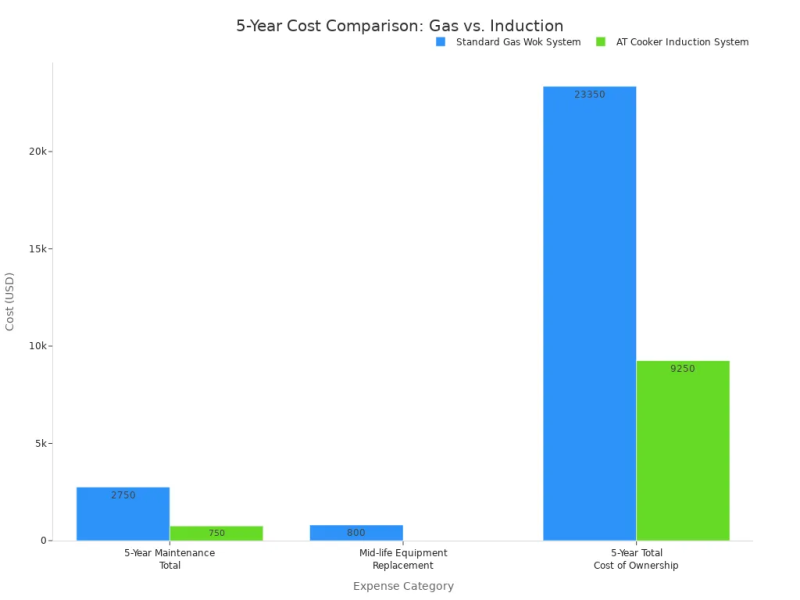
Smart investments reduce your shop overhead costs. An old heating furnace needs burner repairs and brickwork. Clean solid-state tech lowers total ownership costs.
5-Year Warranty Protection: Full coverage includes major functional elements such as the induction coil, sensor switches, and stainless steel chassis.
Cost Risk Reduction: Faulty craftsmanship or premature component failure is fully repaired or replaced free of charge, eliminating unexpected repair outlays from TCO calculations.
Proper system reviews prove the savings of induction power. You increase shop profits and keep top performance.
Choosing the Right Canroon Induction Heating Machine
Pick right tools for good results.
This saves time.
It keeps work smooth.
Canroon builds systems for you.
They fit any workshop size.
Evaluating Your Primary Heat-Treating Process
Check your main needs first.
Metal parts need special heat plans.
Test key steps for top quality:
Thermal and Time Parameters: Track heat timing for hard metal.
Metallurgical Quality: Check inner heat to stop defects.
Operational Efficiency: Check total power and space used.
Process Control & Monitoring: Review single parts and auto checks.
Part shapes guide your tool choice.
See this chart for part needs:
💡 Tip: Test your metal type early. Steel types need special heat speeds.
Matching Machine Wattage to Workpiece Size
Match machine power to part mass.
Small parts use small power.
Big steel parts need high power.
This sends heat deep inside.
Low power makes heating too slow.
Heat leaks into the air fast.
This raises your power bill high.
A smart Canroon tool fixes this.
It sends energy into target spots.
Smart power math saves your budget.
Too much power wastes your cash.
Match part sizes to generator output.
This keeps every shift very efficient.
Selecting an Induction Heating Machine for Your Shop
Picking a tool needs simple steps.
Follow these tips for your setup:
Identify Your Material Type: Magnetic metals heat up very fast. Aluminum parts need much more power.
Determine Target Penetration Depth: Pick high frequency for thin skins. Use low frequency for deep heat.
Calculate Production Volume: High output needs fast auto tools.
Verify Temperature Control Needs: Pyrometers check heat levels in real time.
Canroon sells tools for your shop.
Digital tech controls frequency and power.
Selection Flow:
[Material & Depth] ➔ [Frequency Range] ➔ [Wattage Capacity] ➔ [Canroon Unit]
Good tools lower your shop risks.
They cut down repair costs too.
Canroon power units control heat cycles.
Your shop makes great metal goods.
Picking the right heater helps your shop produce more. High-Frequency tools warm thin outer surfaces fast. Low-Frequency tools send deep heat into heavy metal.
💡 Remember: Check your metal thickness, heat depth, machine power, and process type to get perfect results.
Reach out to Canroon tech experts now for custom heating systems made for your shop!
FAQ
What happens if you use high frequency on a thick metal bar?
You heat the outer surface fast.
The deep core stays cool.
High frequency lacks deep heat penetration depth.
You risk burning the skin.
The inside stays cold.
Can one induction heater handle both high and low frequencies?
Dual-frequency systems change ranges.
They do many jobs.
Standard machines work in one fixed band.
Ask Canroon engineers about multi-frequency models.
They help with mixed shop work.
💡 Tip: Check your daily metal mix before picking a system.
How does frequency choice affect energy bills in your shop?
The right frequency improves thermal efficiency.
High frequency saves power on thin jobs.
Low frequency stops wasted power during deep core heating.
The right match cuts your power bills.
Why do thin metal parts warp under the wrong frequency?
Low frequencies go deep into thin metal.
Excess internal heat grows the core unevenly.
This distorts part shape.
High frequency keeps heat on the surface.
It stops warping.
It protects part shape.
Sign up for updates