




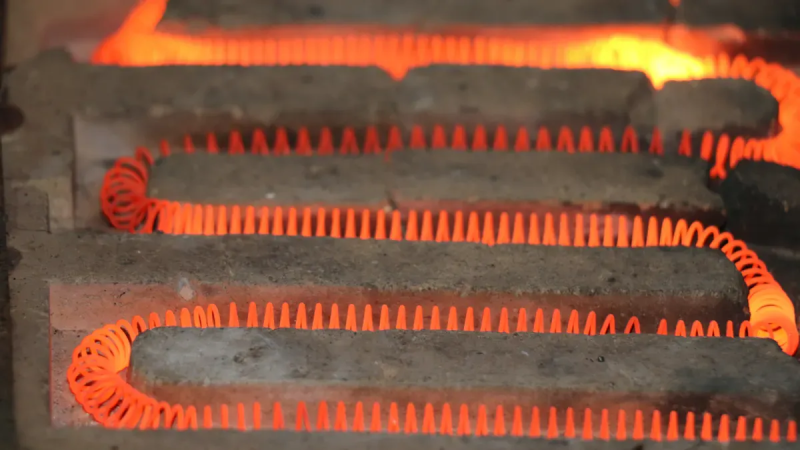
You use induction heating to quickly heat the outside of a gear. This process heats just the gear teeth in a few seconds. After heating, you cool the gear fast to make it harder and stronger. Induction heating lets you choose how deep and where the hardening happens. This helps you get even hardness and longer-lasting gears. Canroon has advanced induction heat for gear solutions that give you exact and steady results.
Key Takeaways
Induction heating makes gear teeth hard fast. This helps gears get stronger and last longer in seconds. You can change the heating by adjusting frequency and power. This lets you get the hardness and depth you want. Induction hardening saves energy and is good for the environment. It keeps workspaces clean too. You need to prepare and set up things right. This helps gears get hard evenly and stops damage. Car and defense companies use induction heating. Their gears last longer and work better because of it.
What is induction heat for gear?
Induction heating principles
Induction heating makes gears stronger and last longer. To do this, you put the gear inside a copper coil. The coil has an electric current that goes back and forth. This makes a magnetic field around the gear. The magnetic field heats up the gear’s surface very fast. You can change how deep the heat goes by changing the frequency and how long you use the current. Induction heating lets you heat only certain parts, like the teeth. The rest of the gear stays cool. This is called induction hardening. It helps you make just the needed areas hard. This is helpful for many kinds of gears.
Induction heat for gear is a smart way to make gears work better. You can heat fast, control the process, and harden only the needed parts.
Eddy current and hysteretic heating
There are two main ways induction heat for gear works.
Eddy currents: When you put a gear in the coil, the changing magnetic field makes small loops of electric current in the gear. These loops meet resistance and make heat where you want it.
Hysteresis losses: If your gear is made of magnetic stuff like steel, the magnetic field makes the molecules flip back and forth. This flipping causes friction and adds more heat. If the magnetic field changes faster, you get even more heat from hysteresis.
Both eddy currents and hysteresis help heat the gear. Eddy currents heat the surface fast. Hysteresis losses give extra heat, especially in steel gears. Induction heat for gear uses both to make strong, hard surfaces that last a long time.
Induction heat for gear is a quick and controlled way to harden gears. It works better than old methods. You can change the process for each gear type.
Gear hardening process steps
Preparation and setup
You begin by getting the gear and tools ready. First, clean the gear to take off oil, dirt, or rust. This makes the hard layer smooth and even. Next, put the gear in the induction heating machine. Canroon’s systems let you pick the best settings for each gear. You choose the right coil size and shape for the gear. This helps the magnetic field cover all the teeth. Check if the gear is lined up right so it spins well. Good prep stops problems and gives a strong, hard surface.
Spin hardening and gear rotation
Spin hardening uses gear rotation to treat the teeth. The gear spins inside the coil while it gets heated. This works well for ring gear induction hardening. Spinning helps heat all the teeth the same way. How you spin the gear changes how the hard layer forms.
Spinning the gear changes the hard pattern on it.
The teeth get hard from the tips down, but this may not be even for heavy gears.
For gears that need more strength, use contour hardening. This makes a hard layer like carburized gears.
Pick the right speed and way to spin each gear. This helps you make the best gears.
Heating and computer control
Induction heating makes the gear teeth hot very fast. You must control the process to get the right hardness. Computers help you change power and frequency during ring gear induction hardening. You can set the exact time to heat each gear. This helps make the hard layer even and stops overheating.
Canroon’s inverters let you control power and frequency alone. You can set the best electromagnetic and heat settings for each gear. This is important for the right metal properties. The gears last longer and work better.
Quenching and cooling
After heating, cool the gear fast to keep it hard. Use a spray or bath to quench the gear. This step makes the hard layer on the outside. Sometimes, heat can spread and soften other parts. You can use special spray blocks to protect the hard layer while heating the rest.
Check the quality of each ring gear induction hardening job. Quality checks make sure the gear is good.
Canroon’s automation and checks help you get good results every time. You can trust ring gear induction hardening to give you strong, even gears.
Benefits of induction heat for gear
Speed and efficiency
Induction heating lets you harden gears much faster. The gear gets hot in just a few seconds. You do not need to heat the whole gear. Only the outside gets hot where you want it. This saves time and helps you do more work. You can finish more gears in less time.
Induction heating is a quick way to heat metal.
You can heat only the spots you need, which makes work easier.
Fast and careful heating means you finish jobs sooner.
Precision and uniformity
Induction hardening gives a very even hard layer. You can control where the heat goes on the gear. This lets you pick the hardness pattern you want. The inductor’s spot helps you get the same result every time. You do not have to worry about the gear bending or twisting. Only the outside gets hard, so the inside stays strong. This is better than carburizing, which can change the gear shape more.
Ring gear induction hardening always gives a hard and even layer you can count on.
Energy savings and eco-friendliness
Ring gear induction hardening is good for the planet. It does not use fossil fuels to make heat. There is no smoke, waste heat, or loud sounds. The air stays clean and the work area is safer. Induction heating uses less energy than old ways. You save money and help the earth too.
Induction heating is clean and does not pollute.
You make the work area better by stopping bad air and heat.
Ring gear induction hardening helps save energy.
Enhanced gear properties
Ring gear induction hardening makes your gear stronger. The outside gets tough and fights off damage. The hard layer keeps the teeth safe from wearing out. The inside of the steel stays tight and strong. Your gear works better and lasts longer.
Induction hardening makes steel harder.
The hard layer helps stop wear and makes the gear tough.
Ring gear induction hardening helps your gear last a long time.
Key factors in induction gear hardening
Frequency and power
You must choose the right frequency and power for your induction hardening process. Lower frequencies let the current go deeper into the gear. This gives you a thicker hardened layer. Higher frequencies heat only the surface, so you get a thin, hard shell. You need to match the frequency to the tooth shape and size. If you use too much power or the wrong frequency, you can cause cracks or uneven hardness. The goal is to make a strong surface while keeping the inside tough. You control these settings with your induction heat treatment system. This helps you get the best results for each gear.
Tip: Adjust the frequency to match the gear’s tooth form. Lower frequencies work well for deep hardening. Higher frequencies are better for surface hardening.
Coil design
The coil design shapes how the high-frequency electromagnetic field heats your gear. The coil’s size, shape, and position decide where the heat goes. A good coil gives you even heating and a uniform hardened layer. You can use gap-by-gap ring gear induction hardening to treat each gap between teeth. This method helps you get the same hardness on every part. You can also use induction hardening along the tooth groove for gears with special shapes. The coil’s turns and current strength change the magnetic field. This lets you control the hardening zone. With the right coil, you can use gap-by-gap ring gear induction hardening or tooth-by-tooth gear induction hardening for different gear types.
The coil design affects the heating pattern and depth.
You can target only the areas you want to harden.
The coil’s position helps you get even results with gap-by-gap ring gear induction hardening.
Gear material
The gear material changes how well induction hardening works. Low-alloy and medium-carbon steels, like SAE 1040 or 4140, respond best. These steels let you get the right hardness and case depth. The material’s microstructure should be even for good results. If the steel has big carbides, it may need more heating and can grow grains. This can make the gear weaker. You should use gears with a quenched and tempered structure for the best martensitic transformation. The way you use induction hardening along the tooth groove depends on the gear type. Some gears need gap-by-gap ring gear induction hardening, while others need induction hardening along the tooth groove. The quenching method, like spray or bath, also changes the final properties.
Pick the right steel for your gear.
Make sure the microstructure is even.
Choose the best induction hardening along the tooth groove or gap-by-gap ring gear induction hardening method for your gear type.
When you control these key factors, you get a strong, even hardened layer. This makes your gear last longer and work better.
Gear performance and applications
Wear resistance and fatigue strength
Induction heating makes gears work better. The process puts a hard layer on the gear’s surface. This layer protects the gear teeth from damage. The gear gets harder, so it does not wear out fast. The inside of the gear stays strong and tough. This means the gear does not break easily. Less friction helps the gear move smoothly. The gear can handle stress again and again without cracking. Gears last longer and work better in machines.
You use an induction heat treatment system to get these good results. The system lets you control how the gear gets hard. This helps the gear fight wear and last longer.
Lifespan improvement
Induction heating helps gears last longer. The hard outside keeps the teeth safe from wearing down. The tough inside lets the gear bend without snapping. You see fewer problems and less fixing is needed. Machines run longer and do not break as much. You save money because you do not buy new gears often. Induction heating makes gears that work well for a long time.
Induction heating helps gears survive tough jobs and heavy use.
Industry examples
Many industries use induction heating. Car companies use it for gear teeth, shafts, and CV joint races. Mining and food companies use it for axles, spline parts, and bearing journals. Defense companies use it for camshaft lobes and crankshaft journals. Gears are in machines that must work every day.
Automotive industry
Defense
Food and beverage industry
Mining industry
Canroon gives these industries strong induction heating solutions. You get gears that work well and last a long time.
You can use induction heating and quenching to make your gear stronger. This process gives the gear a hard outside and a tough inside. The gear keeps its shape better and does not wear out fast. You can change how hard each gear gets. Canroon’s solutions help you get the same results every time and keep track of each gear.
The gear gets stronger and lasts longer.
You can pick how hard you want the gear.
It saves money.
The gear does not wear down as quickly.
To keep your gear working well, do these things:
Clean the coil and cooling system often.
Put oil on moving parts.
Check for any damage.
Make sure the controls work right.
Induction heating for gear hardening helps your gear work better and last longer.
FAQ
What gears work best with induction hardening?
You get the best results with gears made from medium-carbon or low-alloy steel. These materials let you form a hard surface and keep a tough core. Always check your gear’s steel type before starting.
How deep does the hard layer go?
You control the hard layer depth by changing the frequency and power. Most gears have a hard layer between 1 mm and 5 mm. You can adjust the settings for your needs.
Is induction gear hardening safe for the environment?
Yes! Induction heating does not use open flames or fossil fuels. You avoid smoke, dust, and waste heat. This process keeps your workspace clean and safe.
Can you harden only certain parts of a gear?
You can target just the gear teeth or other areas. The coil design and computer controls let you heat only where you want. This gives you precise results every time.
Previous:
Next:
Sign up for updates