




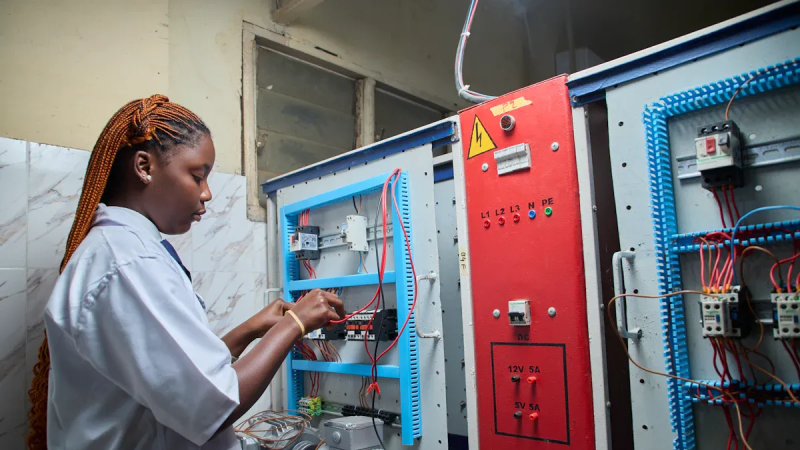
You want good motor control for your machines, and the right vfd application is crucial. Consider why you need a vfd application, such as saving energy, improving performance, and achieving precise control. Canroon offers options that excel in these areas. Ensure you set up, program, and follow safety protocols to achieve the best results.
Key Takeaways
VFDs help save energy by changing motor speed and torque. This means you pay less for electricity.
When you use a VFD, the motor works better and lasts longer. Machines run smoother with a VFD.
VFDs let you control motor speed very well. This is important for things like pumps and HVAC systems.
It is important to install and set up VFDs the right way. This keeps things safe and helps them work their best.
Checking and fixing VFDs often can stop problems. This also helps your motor control system last longer.
What Is a Variable Frequency Drive?
VFD Basics
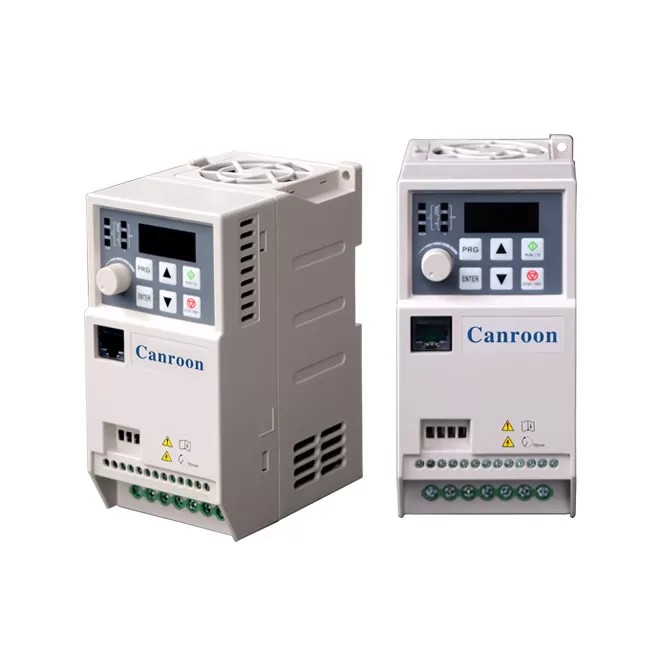
A variable frequency drive helps you change how fast a motor spins. It does this by changing the frequency of the electricity going to the motor. This lets you control the speed and power the motor uses. Some people call it an adjustable-frequency drive, AC drive, inverter drive, or micro drive. The main parts inside are a converter, DC link, inverter, user interface, and control logic. Canroon gives vfd solutions to many industries.
How VFDs Enable Motor Control
A vfd lets you control your motor very well. It works in three steps:
Rectifier Stage: The vfd changes AC power from the wall into DC power.
DC Bus Stage: It makes the DC power smooth and steady.
Inverter Stage: The vfd turns the DC power back into AC power with the right frequency and voltage for your motor.
You can make the motor go faster or slower by changing the frequency. The formula for motor speed is:
Speed (RPM) = (120 × Frequency) / Number of Poles.
With a vfd, you set the frequency to get the speed you want. This saves energy and helps the motor work better.
Key Benefits
A vfd gives many good things for motor systems. Here is a table that shows the main benefits:
You can use a vfd to control fans in HVAC, pumps in irrigation, and air compressors. In factories, a vfd can help cut energy costs by up to 50%. For example, a big fan motor can save a lot of money each year with a vfd. You also spend less on fixing machines because they last longer.
VFD Application in Motor Control
Common Use Cases
A vfd application works in many machines. In factories, conveyor systems use vfd application. You can change the belt speed for each job. Material handling lines use vfd application to move items at different speeds. Packaging lines also use vfd application to keep things smooth. Mixing equipment uses vfd application to make products the same every time. Extrusion machines need exact speed for good quality. Machine tooling uses vfd application for CNC machining accuracy.
Pumps, fans, and blowers use vfd application too. You can set the flow to what you need and save energy. Cranes and hoists use vfd application for better torque control. Mixers can run at different speeds for each batch. You get better motor control and save money on power.
Integration with Automation Systems
You can link a vfd to automation systems like PLCs or DCS. The PLC sends commands, and the vfd changes motor speed and power. This helps your machines work their best. In factories, this setup keeps production lines running well. In HVAC, you can change fan and pump speeds for the building. Water plants use vfd application with PLCs to control pumps and valves. You get steady motor control and better results.
Compatibility Considerations
You must check if your vfd application fits your motor. Look at the voltage, phase, and frequency on the motor nameplate. Make sure the power and current rating are right for your needs. Check the power factor and insulation class for good use. The IP rating shows how well the motor keeps out dust and water. Shaft torque must be enough at all speeds. The motor should handle overloads without getting too hot. If you run slow, make sure the motor can take high loads. Motors must also meet efficiency rules.
You can use vfd application with AC induction motors, synchronous motors, permanent magnet motors, and general-purpose motors if you match them the right way.
Motor Control Methods with VFDs
To get the best from your motor, you must pick the right control method. Each way has good and bad points. You should match the method to your job for better results and to save energy.
V/f Control
V/f control is a popular way to change motor speed. It keeps voltage and frequency in a steady ratio. This works well for many AC motors when you do not need high accuracy.
V/f control keeps voltage and frequency balanced.
It helps you change how fast AC motors run.
It works best for fans and pumps.
Here is a table that shows the main good and bad points:
You can use one vfd to run more than one motor. This saves money. This method is great for pumps and fans that run at the same speed. But, speed control is only about 3% of the top speed. The system reacts slower than closed-loop types because it does not use feedback.
V/f with Encoder
If you want better motor control, you can add an encoder to V/f control. The encoder gives feedback on the motor’s speed. This makes the system much more exact.
The encoder helps keep speed steady, even at high speeds.
You can get speed accuracy within +/- 0.03% of the top speed.
This way gives good speed control without needing fast changes.
Use an encoder for jobs that need steady speed and torque. It is very useful at slow speeds, like in grinding machines. If you only use counter EMF feedback, you may not get enough detail for tough jobs.
Here are some jobs that use V/f control with encoder feedback:
Open-Loop Vector
Open-loop vector control works better than basic V/f control. You do not need feedback tools like encoders. This way uses math to guess the motor’s speed and torque.
It does not give as much accuracy as closed-loop vector control.
This way is good for jobs that do not need high accuracy.
Here is a table to compare open-loop and closed-loop control:
Open-loop vector control has some limits:
You can use open-loop vector control for conveyors, mixers, and other machines that do not need perfect speed or torque.
Closed-Loop Vector
Closed-loop vector control gives you the best motor control. You use an encoder to get real-time feedback. This feedback lets the system change speed, torque, and position with high accuracy.
Closed-loop vector control uses sine commutation with an encoder. The system makes smooth, wave-like currents in the motor. The stator’s magnetic field stays lined up with the rotor. This gives you smooth running and very exact motor control.
By controlling the current, you make sure the motor gives steady force. This is important for jobs that need high accuracy. You can match the stator’s field to the torque you want. This way works well for jobs that need exact speed and torque, even at slow speeds. You get better results than with V/f control.
You should use closed-loop vector control for cranes, elevators, robots, and other machines that need exact moves and force.
Choosing the Right Method
Think about your job before you pick a motor control method. Here are some tips to help you choose:
Use a vfd if you need different speeds, like fans that change airflow.
Pick a way that saves energy and cuts costs.
Use advanced control if your motors start hard.
Choose a way that works with your automation system, like a PLC.
The right control method makes motors work better and gives more torque.
Good motors use less energy and break down less.
Knowing what each way does helps you pick the best one.
Tip: Always pick the control method that fits your job. This helps your motor work better and last longer.
You can get good motor control by learning about these ways and picking the one that fits your system.
VFD Setup Guide
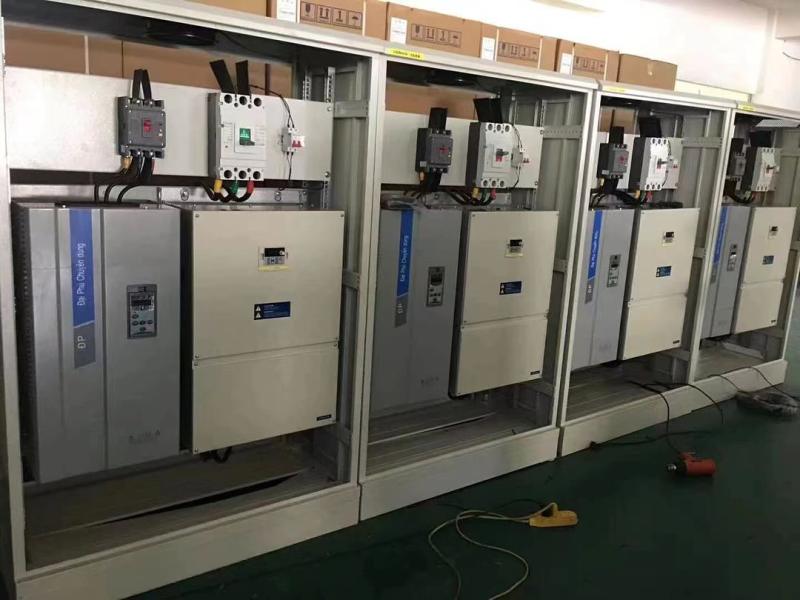
When you set up a variable frequency drive, you help your motor control system work better. You need to do each step the right way so your motor stays safe and works well. This guide will show you how to pick the right VFD, put it in, set the main settings, and keep things safe. Canroon VFDs work well for many motor control jobs.
Selecting a VFD
You have to choose a VFD that fits your motor and what you want your motor to do. Here are the main things to think about:
Motor Compatibility: Make sure the VFD matches your motor’s voltage, current, and power.
Application Requirements: Think about what your system needs, like speed, torque, and load type.
Input Power Supply: Check that the VFD works with your power, like single-phase or three-phase.
Control Features: Look for things like PID control, ways to connect, and feedback options.
Energy Efficiency: Pick a VFD that saves energy, especially for loads that change.
Safety and Protection Features: Choose a VFD with protection for overload, short-circuit, and too much heat.
Budget and Total Cost of Ownership: Think about the price, but also how much you will spend later on.
Tip: Canroon VFDs have many models for different motor control jobs, from simple fans to big automation systems.
Installation Steps
If you install your VFD the right way, your motor control system will run well and stay safe. Do these steps to set up your VFD:
Choose the Right Location
Put the VFD where air can move around it. Stay away from places with lots of dust, water, or shaking. Make sure you can get to the VFD for fixing.Provide Cooling and Ventilation
Leave space around the VFD for air to flow. Do not block the vents. This stops the VFD from getting too hot.Follow Wiring Guidelines
Use the right size wires for your motor and VFD. Follow the maker’s wiring rules. Connect the ground wire the right way.Reduce Electromagnetic Interference (EMI)
Use shielded wires and ferrite cores. Good grounding helps stop EMI from messing up your VFD or other machines.Test the Installation
Before you turn it on, check all the wires. Test the motor’s direction and speed. Look for any problems or alarms. Always follow the maker’s steps for starting up.
🛠️ Checklist for Installation:
VFD is in a clean, dry, cool spot.
All wires are tight and the ground is hooked up.
Vents are not blocked.
Shielded wires are used to stop EMI.
System passes all tests before you use it.
Programming Parameters
When you program your VFD, you can make your motor control work its best. Here are the most important things to set:
You can also change advanced settings for better motor control. Change the V/Hz curve to get the right torque. Use slip compensation to keep the speed steady. Try energy-saving modes for fans and pumps.
Volts per frequency (V/f) settings change how your motor reacts to speed and torque.
Carrier frequency changes how smooth the VFD output is.
Output current monitoring helps protect your motor by warning you if something is wrong.
Note: Always put in your motor’s data the right way. Wrong settings can make your motor control bad or even break the motor.
Safety Tips
Safety is most important when you set up and use a VFD for motor control. Follow these tips to keep yourself and your equipment safe:
Read the user manual before you start. It helps you not make mistakes.
Wear gloves and safety glasses to protect yourself.
Always turn off the power before you work on the VFD.
Check all wires to stop breakdowns.
Keep the VFD dry and away from water.
Match the VFD settings to your motor’s voltage and frequency.
Tighten all screws and wires so nothing gets too hot.
Make sure vents are open for cooling.
Check the VFD and wires often for damage.
Handle the VFD carefully. Do not drop it.
Pick a VFD with overload protection to keep your motor safe.
Do not put too much load on the drive.
Keep the VFD out of sunlight and away from heat.
Use good grounding to stop electrical problems.
Teach anyone who works with the VFD about its features and safety.
⚠️ Alert: Always use lockout/tagout steps before you work on the VFD. This keeps you safe from electric shock.
If you follow these steps, your VFD will be set up for safe and good motor control. Canroon VFDs give you the features and trust you need for any motor control job.
Troubleshooting and Optimization
Common Issues
When you use a variable frequency drive, you might have some problems. Knowing about these problems helps you fix them fast. Here is a table that lists the most common problems, why they happen, and what you can do:
If you see a problem, check for broken parts first. Look at the error codes on the screen. Try resetting the drive to clear the errors. Always check the motor wires and make sure the area is clean and cool. Test the input signals and watch the voltage, current, and frequency. Use the manual if you need more help. If you still cannot fix it, call an expert.
Maintenance Tips
You can keep your motor and control system working well by doing regular checks. Put your drive in a clean, dry, and cool place. Make a schedule for maintenance and follow the maker’s advice. Clean the heat sinks, fans, and covers often. Check all wires to make sure they are tight and not too hot. Take care of the cooling system so it does not get too warm.
Regular checks help you find problems early. You save energy and make your equipment last longer. You also keep your system safe and stop sudden breakdowns.
Try these steps: Look for damage or wear when you check. Clean dust off the drive and motor. Test all wires to make sure they connect well. Keep the cooling system working right.
Performance Optimization
You can get the best results from your motor control system by using smart steps. First, pick the right drive for your job. Think about saving energy and choose a drive that fits your needs. Install and wire the drive the right way. Learn about the settings and how to use them. Do regular checks and maintenance. Watch out for harmonics and power quality. Use features like soft start, PID control, and energy-saving modes.
Tip: Good optimization means your motor uses less energy and works better. You also spend less money and your system lasts longer.
If you follow these steps, your motor control system will work well and give you good results.
You can control a motor well by doing some important things. First, make sure your VFD matches your motor type and horsepower. It should also fit what your job needs. Pumps and fans work best with variable speed. Always look at where you put the VFD and check the motor ratings. This helps you get good results. If you need more help, look at Canroon resources or ask an expert. Always think about safety and check your system often. This keeps your system working well and saves energy.
FAQ
What size VFD do you need for your motor?
You should match the VFD’s voltage and current ratings to your motor’s nameplate. Always choose a VFD with a slightly higher current rating than your motor for safety.
Can you use one VFD for multiple motors?
Yes, you can control several motors with one VFD if they start and stop together. Make sure the total current of all motors does not exceed the VFD’s rating.
How do you reset a VFD after a fault?
Press the reset button on the VFD keypad. If the fault does not clear, turn off the power, check for wiring or load issues, and restart the drive.
What maintenance does a VFD need?
Clean cooling fans and vents.
Check for loose wires.
Inspect for dust or moisture.
Test the drive regularly.
Does a VFD save energy on all motor types?
A VFD saves the most energy on variable torque loads like fans and pumps. You may not see big savings on constant torque loads such as conveyors.
Sign up for updates