





Induction heating for tube and pipe uses electromagnetic fields to generate heat inside conductive materials without touching them. This method offers fast and exact temperature control. For manufacturers like you, this means faster cycle times, lower energy costs, and better product quality compared to older methods.
For you, reading this guide will help you learn how induction heating works. You will discover its main benefits, common applications in the tube and pipe industry, and practical tips for using it. Each section provides practical insights to improve your production line.
At Canroon, we focus on advanced induction heating systems like the CR2100. Our system meets the tough needs of modern tube and pipe production. It delivers high efficiency and dependability for steady results across different tube sizes.
Key Takeaways
Induction heating uses magnets to heat metal quickly and accurately.
It saves energy and money compared to older ways.
It makes heating safer and steadier.
You can use it for welding, heating to soften, and shaping.
Pick the correct coil and frequency for your tube size.
How Induction Heating Works for Tube and Pipe
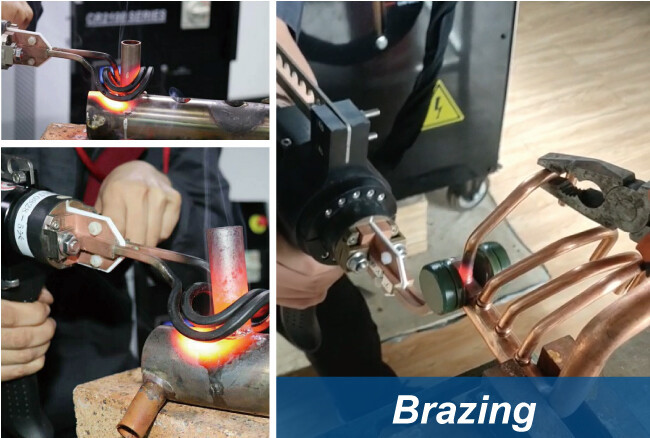
Electromagnetic Principles for Cylindrical Workpieces
Induction heating uses a simple physics idea. You send a high-frequency alternating current through a copper coil wrapped around the tube. This current makes a fast-changing magnetic field around the coil. When you put a conductive metal piece inside that field, the magnetic field creates circular eddy currents inside the metal. These currents fight against the metal's electrical resistance, and that produces heat through the Joule effect. The metal piece acts like a short-circuited second loop inside the coil's magnetic field.
For cylindrical workpieces, this process works very well. You can wrap the coil completely around the tube, making a helical or solenoid shape. This design creates eddy currents that flow along the length of the workpiece. The magnetic flux lines pass through the tube efficiently, and the coupling efficiency heavily depends on the gap between coil and workpiece. A small, consistent gap of 0.5–3 mm gives the best energy transfer.
Magnetic materials add another heating method. Below the Curie temperature, the alternating magnetic field makes magnetic domains reorient quickly. This causes internal friction and extra heat through hysteresis losses. Magnetic steels with permeability values of 100–500 heat more efficiently than non-magnetic materials. The reference depth can change by up to 20× for magnetic steels depending on temperature, which strongly affects heating behavior.
The heat generation pattern in a tube follows a predictable sequence. At first, eddy current losses appear in a rectangular shape matching the coil's projection. After about 60 seconds, heat shifts to positions facing the vertical sides of the coil, forming an elongated ellipse. At steady state, the heat source becomes two parallel vertical lines with the highest temperatures at the coil's center. This confirms that eddy current losses remain the only source of heat in the tube.
The Role of Frequency and Coil Design
Frequency selection decides how deeply heat goes into the tube wall. Higher frequencies push induced currents near the surface, giving shallow heating. Lower frequencies allow deeper penetration, giving uniform heating through the wall thickness. For hollow shapes, the skin depth must be larger than the wall thickness to get through-wall heating. This need usually requires lower frequencies than those used for solid cylinders.
Think about a real-world example. A tube with 127 mm outer diameter and 12.7 mm wall thickness runs at 3 kHz. This setup uses three in-line coils with water spray quench, handling 3 tons per hour. The relatively low frequency makes sure heat reaches the entire wall thickness. On the other hand, tube end heating operations prefer higher frequencies to get fast temperature rise while limiting heat spread along the tube body.
Coil design must adjust to different tube diameters. Turn spacing and pitch control magnetic field uniformity, preventing hotspots. Variable pitch makes up for edge effects along tubes of varying diameter. Flux concentrators made of ferrites or laminations send energy to specific areas, keeping uniform heating when tube diameter changes. Single-turn coils give localized heating, while multi-turn coils give broader, more uniform temperature profiles.
Canroon's CR2100 uses solid-state technology for efficient power conversion at 85–95%. This efficiency makes sure consistent results across different tube sizes. The system has automatic load matching, which adjusts output when you fit a different-sized coil. This removes unsafe operating areas and provides smooth adaptability. You can trust the CR2100 to deliver reliable performance no matter what your tube specifications are.
Key Advantages of Pipe and Tube Induction Heating
Speed, Efficiency, and Energy Savings
You will see the speed difference right away when you switch from gas torches or furnaces to induction heating. Old methods heat the air around the tube first, then move that heat to the metal. This indirect process wastes time and energy. Induction heating creates heat right inside the tube wall using electromagnetic eddy currents. The workpiece hits target temperature in seconds instead of minutes, which greatly shortens your cycle times.
Energy efficiency sets induction apart from old methods. Gas-fired furnaces usually run at 40-55% efficiency, so nearly half your fuel becomes wasted heat. Regular electric resistance heating does better at 65-75%, but still loses a quarter of the energy you put in. Induction heating reaches 85-90% efficiency, wasting only 10-15% of the energy you pay for. This difference leads directly to lower operating costs and a smaller carbon footprint for your facility.
The CR2100 system boosts these savings with solid-state power conversion at 85-95% efficiency. You get more usable heat from every kilowatt of electricity. The system's automatic load matching makes sure you receive full output power no matter the tube size. When you fit a different-sized coil, the CR2100 adjusts right away to optimal settings. This removes the unsafe operating areas common with older systems and keeps consistent performance across your whole product range.
Precision, Repeatability, and Worker Safety
Temperature control becomes a matter of digital precision rather than operator judgment. Induction heating for tube and pipe lets you program exact power levels, heating times, and temperature profiles. You can log every parameter for each production run. This documentable process control means identical thermal profiles across every tube, supporting quality audits and meeting strict customer specifications.
Repeatability comes from the physics of the process itself. Induction heating creates heat directly within the material, focusing energy exactly where you need it. Real-time monitoring and adjustment keep heating patterns consistent. When you connect the system with PLC controls, sensors, and touchscreens, you can watch performance and fine-tune parameters with confidence. This automation removes manual variability and produces part-to-part consistency that gas torches simply cannot match.
Worker safety improves greatly with pipe and tube induction heating. Consider these documented benefits:
Flameless process: No open flames or combustion fumes, reducing burn and fire risks.
Cool external surfaces: The workpiece and surrounding area stay relatively cool, minimizing hazards.
No hot output coils: Induction coils stay cool during operation, creating a safer environment.
Cleaner workplace: No soot, smoke, or harmful gases, improving air quality and operator comfort.
Reduced explosion risk: No open flame minimizes ignition sources in volatile environments.
These safety advantages also lower your insurance costs and boost employee morale. Workers appreciate a cleaner, cooler environment without the constant danger of open flames. The lack of combustion byproducts means better air quality throughout your facility, which supports long-term worker health.
The mix of speed, efficiency, precision, and safety makes induction heating the better choice for modern tube production. You gain measurable cost savings while improving working conditions and product quality at the same time.
Common Applications in Tube and Pipe Processing
You can use induction heating for many tube and pipe jobs. This method gives fast and exact heat for tasks that need controlled heat. From welding to drying, induction heating helps your production line. The CR2100 system supports high-speed work, so it works well for continuous production.
Welding, Brazing, and Seam Annealing
Longitudinal seam welding is a common use. Induction heating gives controlled heat for the weld area. The CR2100 system runs at 85-95% efficiency, which cuts your power use. Automatic load matching gives full output power for different tube sizes. The small size makes it easy to add to existing lines. You produce less scrap because the heat is controlled and repeatable.
Seam annealing fixes the coarse grains in the weld and the heat-affected zone. It removes leftover stress that can cause bending or breakage. The process lowers high hardness (up to ~40 HRC) from low-carbon martensite. This stops cracks from forming and makes welded tubes stronger and last longer. Brazing heat transfer tubing also gains from precise heating. Induction heating for tube and pipe gives you steady results for these important joints.
Heat Treating, Drying, and Forming Operations
Full body annealing treats both magnetic and non-magnetic tubes. You get even temperature through the full wall thickness. Another use is drying surface moisture before shot blasting. Induction heating gives fast, efficient drying. Equipment is usually placed before the shot blasting step. This step removes moisture without slowing your line.
In the medical field, forming stainless steel tubes needs precise annealing. For example, a thin-walled tube reaches 2,000°F (1,093°C) in under 5 seconds. A 2 kW induction system at 218 kHz does this job. The tube is held with a mandrel inside during heating. After annealing, the tube is formed using the mandrel. This method makes sure shapes are exact for medical products.
Induction heating is used to shape metal parts by heating them to high temperatures and then molding them. This method is often used to make precise medical products, which includes tube forming.
Induction heating for tube and pipe supports such high-speed work. You can add it to continuous production lines. The CR2100 system handles these jobs with reliability and efficiency.
Practical Considerations for Implementing Induction Heating
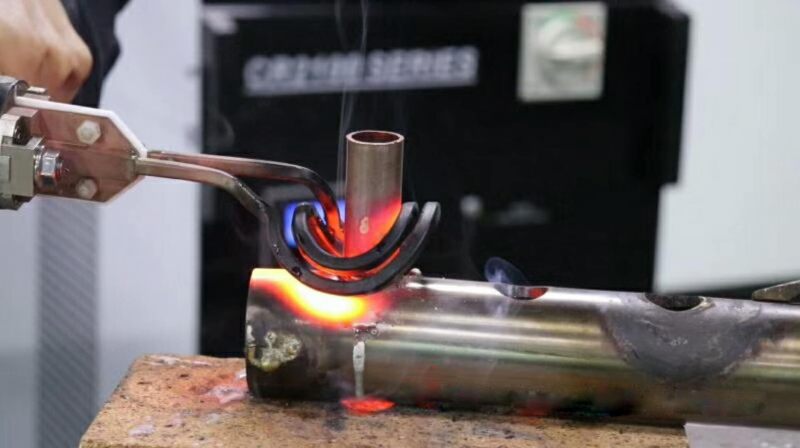
Coil Design and Power Requirements
Your coil design depends on the tube diameter and material type. The coupling distance between the coil and the workpiece changes with the part size. For billet-stock diameters of about 1.5 inches, you use a coupling distance of 0.75 inch. For 4-inch diameters, the gap increases to 1.25 inches. Larger parts need larger gaps.
Material type also affects your coil design. Magnetic materials allow looser coupling distances, typically 0.25 to 0.38 inch. Non-magnetic materials need tighter gaps. You must match the coil to the specific tube geometry for efficient energy transfer. A well-designed coil reduces cycle times and lowers maintenance needs.
The CR2100 system supports customized coils for your exact specifications. You can order ferrite and impeders as consumables. These components focus magnetic energy where you need it. This customization ensures consistent heating across different tube sizes.
Power requirements change with the application. Through-heating of magnetic materials needs multiple-turn inductors and slow power transfer. Surface heating uses closer coupling, around 0.060 inch for static parts and 0.075 inch for progressive heating. Select the right power level for your production speed and material thickness.
Material Thickness, Frequency, and Integration
Wall thickness determines the frequency you need. Thinner walls need higher frequencies for effective heating. Low frequencies pass through thin walls without generating enough heat. High frequencies work well for thin material by creating eddy currents near the surface.
For continuous-feed systems, induction heating can use dual-frequency designs. A lower frequency heats the material below the Curie temperature. Once the material becomes non-magnetic, a higher frequency continues heating. This approach ensures throughput and tight temperature control.
Integration into your existing line requires careful planning. The CR2100 has a compact design with dimensions of 621.4 by 282.4 by 349.4 millimeters. This footprint of about 0.18 square meters saves valuable floor space. The portable design allows you to move the system between workstations. The transformer weighs only 1.5 kilograms.
Automation compatibility is a key advantage of induction heating systems. The system offers instantaneous response with millisecond power adjustments. You can integrate it with PLC controls, temperature monitoring, and robotic loading systems. This reduces manual handling and improves repeatability.
Portable induction heaters fit in small spaces, unlike stationary models that need more room.
The CR2100's modular structure combines the power source, transformer, and coil in one unit. This eliminates separate equipment footprints. You gain flexibility to process different tube sizes without major line changes. The system's intelligent power distribution adapts to varying geometries and alloys, making induction heating a versatile choice for your production line.
Induction heating for tube and pipe delivers unmatched speed, precision, and efficiency. You gain faster cycle times, lower energy costs, and consistent product quality. These advantages make it a superior choice for modern manufacturing operations.
When evaluating your heating needs, consider production volume, material type, and required temperature uniformity. These factors determine whether induction heating fits your specific application. The CR2100 system adapts to various tube sizes and alloys, giving you flexibility across different production runs.
For tailored solutions and expert guidance, trust Canroon. Our CR2100 series elevates your production efficiency and product quality. Contact us today to discuss your requirements and discover how induction heating transforms your operations.
FAQ
How much can I save on energy costs with induction heating?
You can cut energy waste a lot. Gas furnaces work at 40-55% efficiency. Electric resistance heating works at 65-75%. Induction heating works at 85-95% efficiency. The CR2100 system also works at that high rate. Your electricity bill goes down while production speed goes up.
Can I add induction heating to my existing production line?
Yes, you can add it easily. The CR2100 has a small size of about 0.18 square meters. Its portable design lets you move it between workstations. You can connect it with PLC controls and robotic loading systems. The system changes settings in milliseconds.
What frequency do I need for my tube wall thickness?
Thinner walls need higher frequencies for good heating. Low frequencies go through thin material without making enough heat. For thick walls, lower frequencies heat deeper. The CR2100 changes itself when you swap coils. This gives the best heating for different tube sizes.
How does induction heating improve worker safety?
Induction heating gets rid of open flames and burning fumes. Coils stay cool when working. The part surface stays fairly cool outside the heated area. No soot or smoke dirties the air. This cleaner space lowers burn risks and makes the air better for your team.
Sign up for updates