




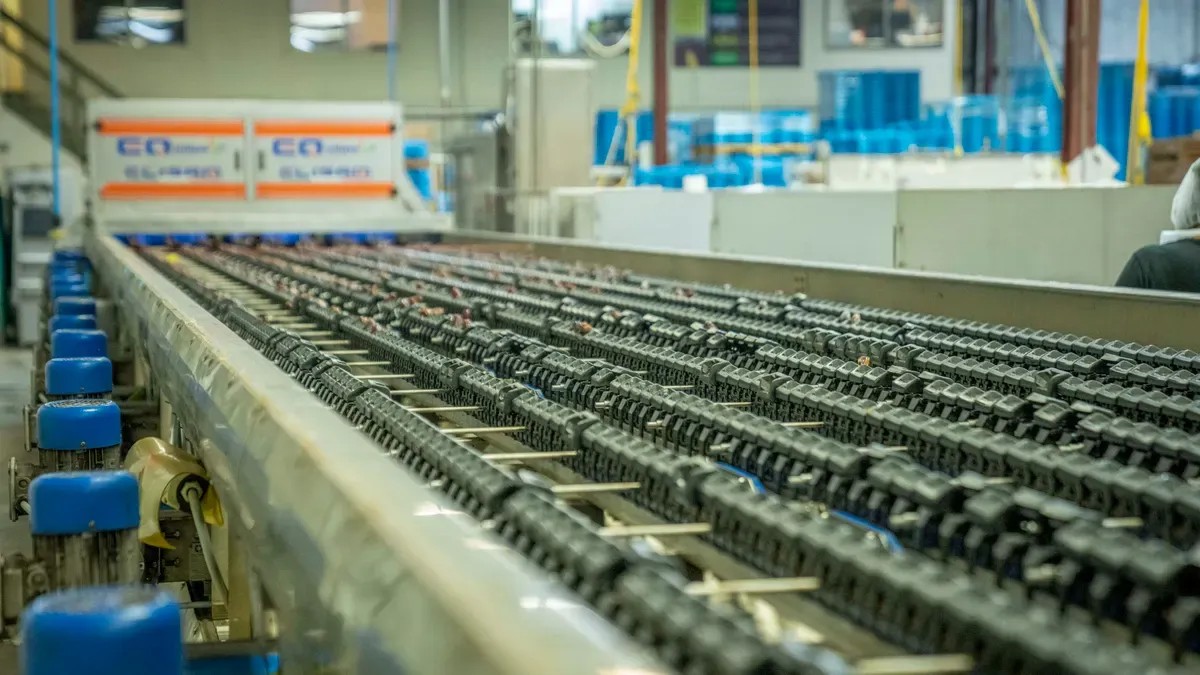
A drive that does not match can shut off without warning, overheat your motor, or wear out the belt too soon. You avoid these problems by choosing a VFD for a conveyor motor with care. Start with the load type. Then read the motor nameplate. Next, size the drive by full load amps, not horsepower. Finally, match the unit to your plant environment. Each choice builds on the one before it, from load analysis through commissioning checks. Canroon's years of conveyor application work shape the practical tips in this guide.
Key Takeaways
Figure out the load type first. Most conveyors need a heavy-duty drive for constant torque.
Look at the motor nameplate. Choose the drive based on full load amps, not horsepower.
Pick sensorless vector control to keep speed steady when loads change.
Plan your installation. Use the correct enclosure and keep motor cables short.
Consider safety and the drive’s communication needs. Then match the drive to your control system.
Identify the Conveyor Load Type First
Load type is the first choice you make before picking any drive. The machine type and its torque needs are at the top of every VFD selection checklist. You can only check speed range, starting torque, overload capacity, and cooling needs after you know the load type. A wrong pick here causes nuisance overcurrent trips during commissioning, and those trips often come from variable torque settings used on a constant torque load.
Constant Torque vs. Variable Torque
Most conveyors are constant torque loads. They need the same torque percentage at low speed and high speed because the same weight may move at different rates. Fans and pumps act in a different way. Their torque demand drops sharply at lower speeds, following the square of the speed. This difference drives every choice that comes after.
A constant torque load needs a heavy-duty overload rating. A variable torque load only needs a normal duty rating. Using variable torque settings on a constant torque load is a leading cause of commissioning failures.
Duty Cycle and Breakaway Torque
Breakaway torque often goes well above running torque. A horizontal conveyor may need 250% of running torque to start, such as 550 N·m breakaway against 220 N·m running torque. Bearings, belts, and seals commonly need 1.5 to 3 times running torque after settling. Your drive must supply that peak without tripping.
Duty cycle shapes overload sizing just as much. Think about a 5.5 kW conveyor with frequent starts under full load. The motor FLA is 11.5 A. A 1.15 service factor raises that to 13.2 A. A 150% starting torque requirement means 150% for 60 seconds, or 17.3 A peak. You would pick a heavy-duty rated drive with 150% overload capacity, or upsize to a 7.5 kW frame rated 17 to 18 A for torque headroom. The final pick: a 7.5 kW heavy-duty drive, 17 A continuous, 150% overload. That gives reliable full-load starting plus room for future production increases.
Constant-torque loads such as conveyors demand the same torque regardless of speed, so at low speeds the motor still needs maximum torque and therefore maximum current. The VFD must be sized to supply this current continuously. Many constant-torque applications also require high starting torque—often at least 150% of the motor's torque rating to get the conveyor moving—so in some cases a drive with an overload capacity larger than the motor's is selected.
VFD overload ratings are thermal accumulation models, not simple time-current curves. They track I²t heating in the IGBT junctions and DC bus capacitors. A drive hit by repeated 140% overload events of 30 seconds each, with poor cooling between events, will trip on thermal overload even though it never exceeds its instantaneous 150% rating. The thermal model accumulates heat faster than the cooling system can dissipate it. Duty cycle—the frequency and duration of overload events plus cooling intervals—decides whether a given overload capacity is sustainable. Frequent starts and stops demand higher safety factors of 1.4 to 1.6 because each acceleration cycle adds heat.
Read the Motor Nameplate Data
The nameplate tells you everything you need to begin choosing your drive. Each item answers a different question, and missing even one can cause problems later.
Horsepower, Voltage, Phase, and FLA
Horsepower is the least helpful number on the plate for choosing a drive. It shows what the motor can do, not what the drive must supply. Two 50 HP motors at 460V three-phase might draw 65A and 69A, depending on efficiency, power factor, and design. Size on amps, then check the horsepower range.
FLA guides the selection. Compare your motor's FLA to each drive's amp rating, then add extra room for constant torque loads and hard starts. A drive that is too small trips every time you power up. Use horsepower only to narrow your search.
Match VFD Input to Motor and Supply
Check your building's power before you buy. Common drive input ratings include single-phase 200–240 VAC and three-phase 380–480 VAC. A 480V drive on a 208V supply will not give rated output, and the wrong voltage can damage the drive right away.
Three-phase AC induction motors are the normal choice for manufacturing conveyors. If you must use single-phase input, a standard drive can work by connecting the two hot wires and leaving one terminal unused, but this puts current on two phases and raises the risk of input diode failure. Oversizing the drive makes up for this. Keep drive and motor voltages the same; if voltage must change, use a transformer instead of relying on the VFD for a conveyor motor to close the gap.
Size the VFD for a Conveyor Motor by Current
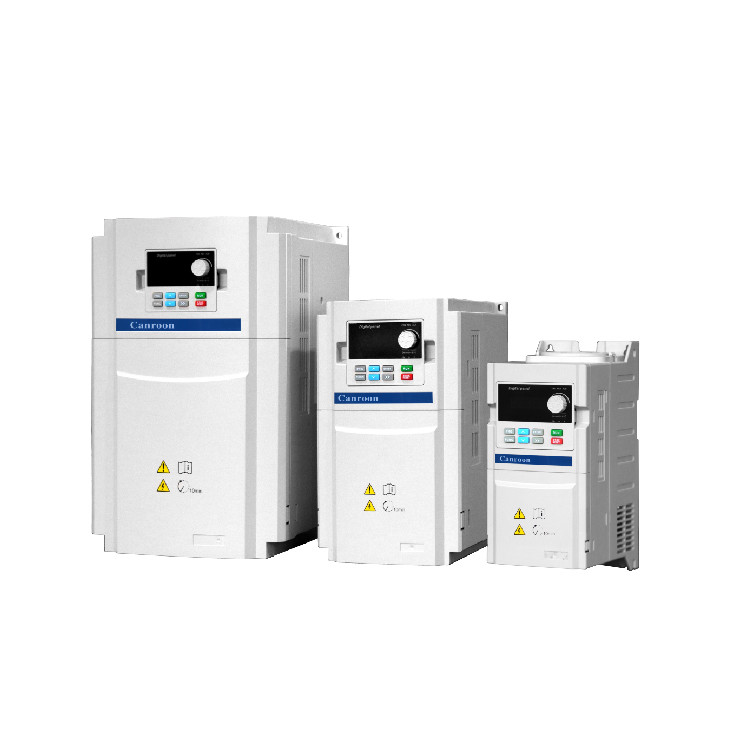
Motor current decides the choice, not horsepower. A drive picked only by horsepower may be too small when the motor pulls more amps than expected. Always match the drive's steady output current to the motor's full load amps at the right voltage.
Match the VFD for a Conveyor Motor to Motor FLA
Find the nameplate FLA before you buy anything. The drive's steady current rating must be equal to or greater than that number. For conveyor jobs, add overload headroom on top of the base FLA. This extra demand often pushes your choice to the next frame size.
The safety factor you use depends on how the conveyor runs. Use this table as your guide:
A conveyor that starts and stops often needs the higher end of that range. Each acceleration cycle adds heat to the drive's IGBT junctions and DC bus capacitors. The thermal model builds up this heat faster than the cooling system can remove it. A drive hit by repeated overload events will trip on thermal overload even when it never goes past its instantaneous rating.
An undersized drive causes real damage. It overheats, trips often, and may fail completely. It also wastes power because it cannot meet the motor's demand.
Overload Capacity and Derating Factors
Conveyors need a heavy-duty drive with 150% overload capacity for 60 seconds. This covers breakaway torque when the belt starts under load. If your conveyor needs more than 150% overload or longer than 60 seconds, move up a frame size.
Derating factors lower the current a drive can deliver. Watch for these four items:
Switching frequency
Ambient temperature
Installation altitude
Enclosure ventilation
Altitude derating follows a clear rule. Derating starts at 1,000 meters elevation, with a drop of 1% per 100 meters above that point. A 100 A drive at sea level becomes a 90 A drive at 2,000 meters. Large conveyor systems at the Collahuasi mine in Chile run at close to 5,000 m above sea level, proving that high-altitude conveyor jobs work with proper drive selection.
Higher altitude lowers air pressure and density, which cuts cooling capacity. Manufacturers set derating rules for altitudes above 1,000 m as per standards and installation manuals.
After you apply derating for temperature, altitude, carrier frequency, and enclosure conditions, the available steady current must still meet or exceed the motor FLA. If derating drops available amps below FLA, upsize one frame or lower the carrier frequency.
Canroon's application engineers can help you size a VFD for a conveyor motor when motor data or load conditions leave you unsure. Their sizing support takes the guesswork out of tough jobs.
Choose the Control Method and Dynamic Response
The control method decides how well your conveyor holds speed when product weight changes. You have two main choices: open-loop V/Hz and vector control. Each suits different conveyor demands.
Open-Loop vs. Closed-Loop Vector Control
Open-loop V/Hz control keeps a constant voltage-to-frequency ratio. It works for basic material conveyors where a speed variation of plus or minus 2 to 3 percent does not affect your process. However, V/Hz control allows slip of 50 to 100 RPM under load changes. That slip can cause product jams at transfer points. V/Hz also cannot reliably start a loaded conveyor or an inclined lift.
Vector control solves these problems. It provides tighter speed regulation and higher starting torque. Open-loop vector control produces 100 percent rated torque down to about 8 Hz. It does not need an encoder. Closed-loop vector control adds an encoder for even tighter regulation, but most conveyors do not need that level of precision.
Sensorless Vector for Constant Conveyor Speed
A sensorless vector drive estimates motor speed from current and voltage. It needs no tachometer. The drive adjusts output frequency to hold your target speed. Program 1800 rpm into the drive on a 4-pole motor, and it will output whatever frequency is needed to hold 1800 rpm instead of the 1780 rpm on the nameplate.
Modern VFD's can use software to compute speed of the motor based on analyzing the motor current. This calculated speed can be used to control load speed pretty close without using a tach feedback, but with some speed error.
This response suits dynamic conveyor applications. The VFD for a conveyor motor controls both speed and torque. When load changes, the drive senses the speed shift and supplies corrective torque to bring speed back.
Plan for Installation and Environment
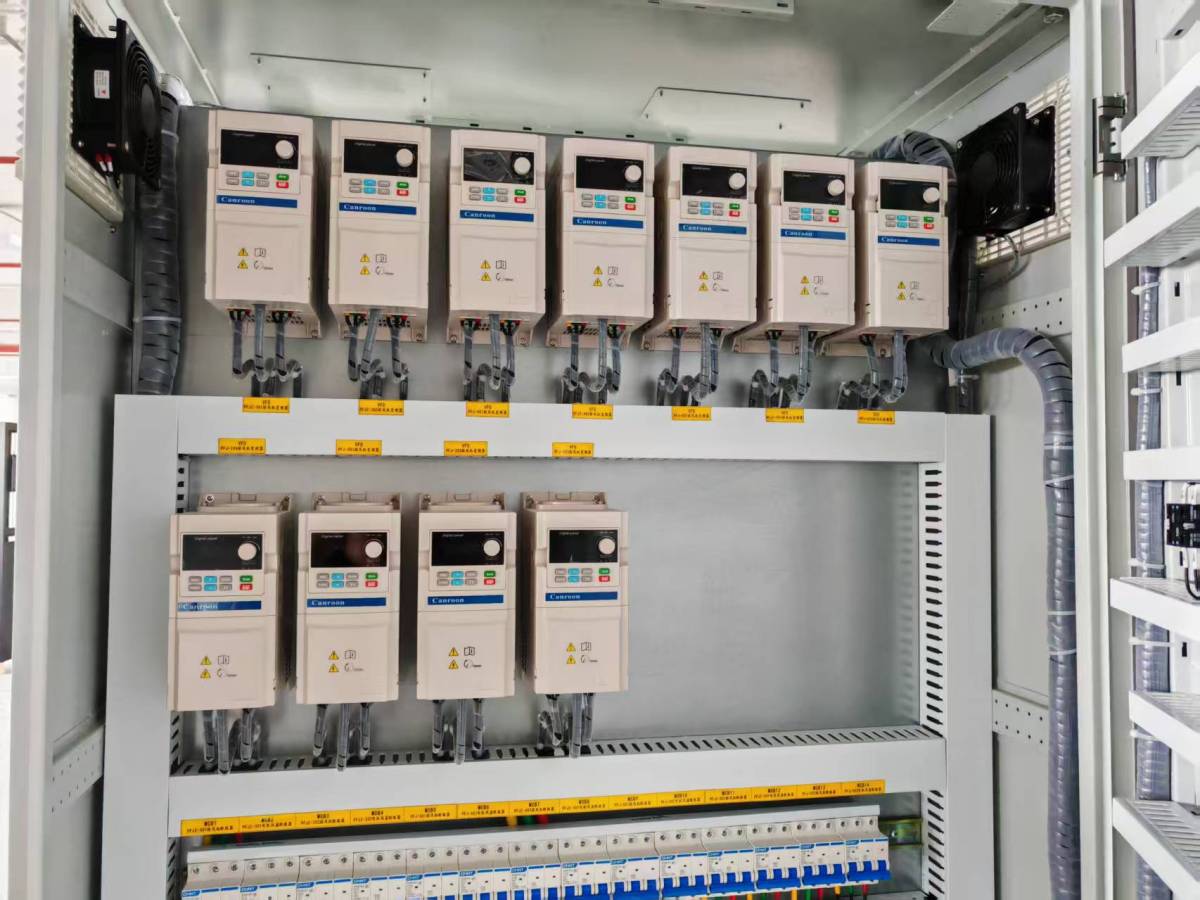
The space around your drive matters as much as the drive itself. VFDs convert AC to DC and back to AC, and that process generates heat. Overheating kills power electronics faster than any other cause. Most drives handle ambient temperatures up to 40°C (104°F) without derating. A hotter location forces you to oversize the drive or add forced ventilation.
Enclosure, Temperature, and Contamination
Pick an enclosure that matches your plant floor. A clean electrical room works fine with a basic IP20 or NEMA 1 rating. Dusty conveyor areas need NEMA 12 or IP54 protection. Washdown zones call for NEMA 4X. Keep relative humidity below 95% non-condensing, and add cabinet heaters if the drive sits idle in cold, damp conditions.
VFDs are power conversion machines, and that process of converting AC to DC and back to AC again creates a lot of heat. Getting that heat away from the drive is arguably the most critical factor for its survival. Overheating is the number one killer of power electronics.
Mounting, Cable Length, and Placement
Mount the drive vertically on a rigid surface. Follow the manufacturer's clearance specs on top, bottom, and sides. Never block the vents. In an enclosed panel, install fans and filters to pull cool air in from the bottom and push hot air out the top. Excessive vibration loosens connections, so wall-mount drives on solid surfaces.
Motor cable length limits matter for voltage reflection. Without output filtering, keep cable runs to 200–300 feet maximum. Add an output reactor, dV/dt filter, or sine-wave filter to extend runs up to 1,000 feet or more. Proper placement and cable planning prevent overheating and nuisance faults before they start.
Handle Integration, Safety, and Support
Your drive has to connect with your control system and keep your workers safe. Plan these connections before you buy.
I/O, Safety Circuits, and E-Stop Wiring
Figure out your digital and analog I/O needs first. Digital inputs take care of start, stop, and fault reset signals. Analog inputs receive speed references from a PLC or potentiometer. You also need digital outputs for run status and fault alarms.
Safety circuits need just as much thought. Safe Torque Off (STO) lets you cut power to the motor without shutting off main power. Emergency stop buttons should be placed at key points along the conveyor path. Safety-rated contactors give you positive disconnection. Light curtains and safety mats protect operators where they work with the line. Controlled deceleration ramps stop loads from shifting during stops. Lockout/tagout provisions keep maintenance crews safe.
Communication Protocols and Maintenance Planning
Your plant's current network often decides the protocol. Modbus is the most common pick among VFD manufacturers. It works well for simple systems and older plants. EtherNet/IP fits Rockwell environments. PROFINET suits Siemens-centered plants. Profibus DP serves existing Siemens legacy installations. EtherCAT handles high-speed synchronization for motion control.
Pick based on what your plant already runs, the loop speed you need, and your team's ability to maintain it. Go with Ethernet-based protocols if you plan to add cloud dashboards later.
Plan for ongoing support before installation. Keep spare drives or critical parts on hand. Make sure there is maintenance access around the cabinet. A well-integrated VFD for a conveyor motor cuts downtime and makes troubleshooting easier.
Use a Checklist and Avoid Common Pitfalls
Pre-Purchase Checklist for VFD Selection
A written checklist helps you choose the right drive. Go through each step before you buy.
Check the duty rating: heavy duty (constant torque) works best for most conveyors because they need high starting torque under load.
Check the overload capacity: heavy duty usually gives 150% overload for 60 seconds. If the conveyor starts with a load, you may need a drive one or two sizes bigger.
Plan for braking: you need regenerative or dynamic braking when the load can spin the motor, like on downhill conveyors.
Look at DC bus setup: many drives on long conveyors often work better with a shared DC bus.
Pick the right enclosure: NEMA 12 or NEMA 4 with good cooling handles dusty conveyor areas. Apply derating for temperature and altitude when you choose.
Make sure the motor works: use inverter-duty motors (NEMA MG1 Part 31) by default. Check cable length and dV/dt filtering.
Size based on full load current (FLA) and application overload needs, not only on motor power in horsepower.
Write down your duty cycle and environment now. Record starts per hour, ramp time, reversing needs, temperature where the VFD sits, altitude, and enclosure rating.
Common Mistakes and How to Avoid Them
The biggest sizing mistake is ignoring startup torque. Steady-state numbers may look good on paper, but the conveyor trips on overcurrent every time it starts with a full load. Always figure out the torque needed to get the full mass moving from a stop.
Another common error is sizing by horsepower alone. For constant torque loads like conveyors, the VFD must supply full-load current at any speed. Lower speed does not lower current demand. Check the drive's current rating against the motor's FLC, then compare starting torque needs with the VFD's overload ability.
Skipping derating for temperature and altitude also causes false trips. A drive that works at sea level may not work at higher elevations or in a hot cabinet. Canroon's application engineers can review your checklist and help you avoid these mistakes when you pick a VFD for a conveyor motor.
Begin by looking at the load type. Most conveyors carry a constant torque load, so they need a heavy-duty drive. Next, check the nameplate. Size the drive using FLA, not horsepower. Choose sensorless vector control to keep speed steady when the load changes. Plan your setup with the right enclosure and cable length. Confirm your I/O, safety circuits, and communication needs.
These steps keep your motor from getting too hot. They cut down on nuisance trips. They make your conveyor more reliable and reduce downtime. If motor data or load conditions seem unclear, ask Canroon's application engineers for help. A well-picked VFD for a conveyor motor pays you back with years of steady uptime and smooth operation. Picking the right size is a long-term investment in your conveyor line.
FAQ
Can I size a VFD by motor horsepower instead of FLA?
No. Horsepower tells you what the motor can do, not what the drive must give it. Two motors with the same horsepower can pull different amps. Always match the drive's steady current rating to the motor's nameplate FLA.
How much overload capacity does a conveyor VFD need?
Most conveyors need a heavy-duty drive with 150% overload capacity for 60 seconds. This handles breakaway torque when the belt starts with a load on it. If your conveyor needs more than that, go up a frame size.
Do I need an encoder for constant conveyor speed?
Usually not. A sensorless vector drive figures out motor speed from current and voltage, and it holds speed within 1–3% of the setpoint. That accuracy works for most conveyors. Add an encoder only when your process needs tighter control.
How does altitude affect VFD selection?
Derating starts at 1,000 meters elevation, with a 1% current drop for every 100 meters above that point. A 100 A drive at sea level turns into a 90 A drive at 2,000 meters. Go up a frame size if the derated amps fall below motor FLA.
What is the maximum motor cable length without a filter?
Keep cable runs to 200–300 feet maximum when you have no output filtering. Longer runs cause voltage reflection that can harm motor insulation. Add an output reactor, dV/dt filter, or sine-wave filter to stretch runs up to 1,000 feet or more.
Sign up for updates