




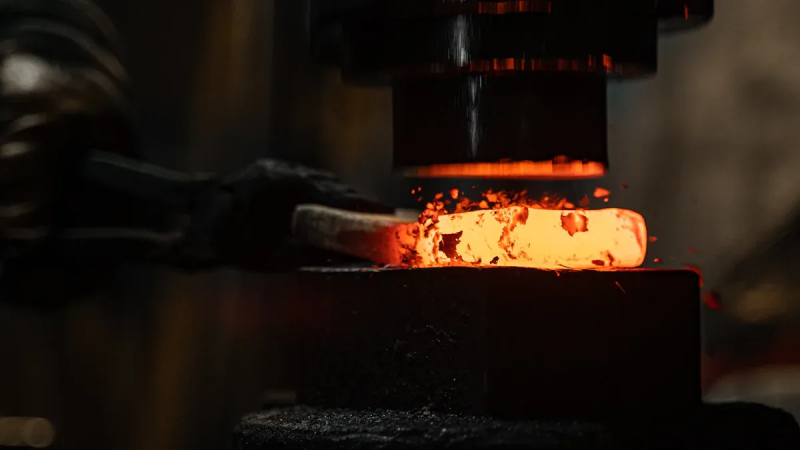
Choosing the right induction forging heater in 2026 means you must match its real power output and compatibility to your forging needs. You need to look at the material type, part size, power level, frequency range, safety features, and cost.
Smarter controls, modular systems, and energy efficiency lead the way in modern heater designs. You can compare models from Canroon and other top companies to find the best solution.
Choosing the right induction forging heater in 2026 means you must match its real power output and compatibility to your forging needs. You need to look at the material type, part size, power level, frequency range, safety features, and cost.
Smarter controls, modular systems, and energy efficiency are important in new heater designs. You can look at models from Canroon and other top companies to find the best one for you.
Key Takeaways
Make sure the induction heater's power fits your material and part size so it heats well.
Think about energy efficiency and safety features to save money and keep workers safe.
Use a checklist to compare heater models and see if they fit your production needs.
Find smart controls and modular designs to make the heater more flexible and work better.
Check the company's support and reputation to get good service and maintenance.
Application Needs
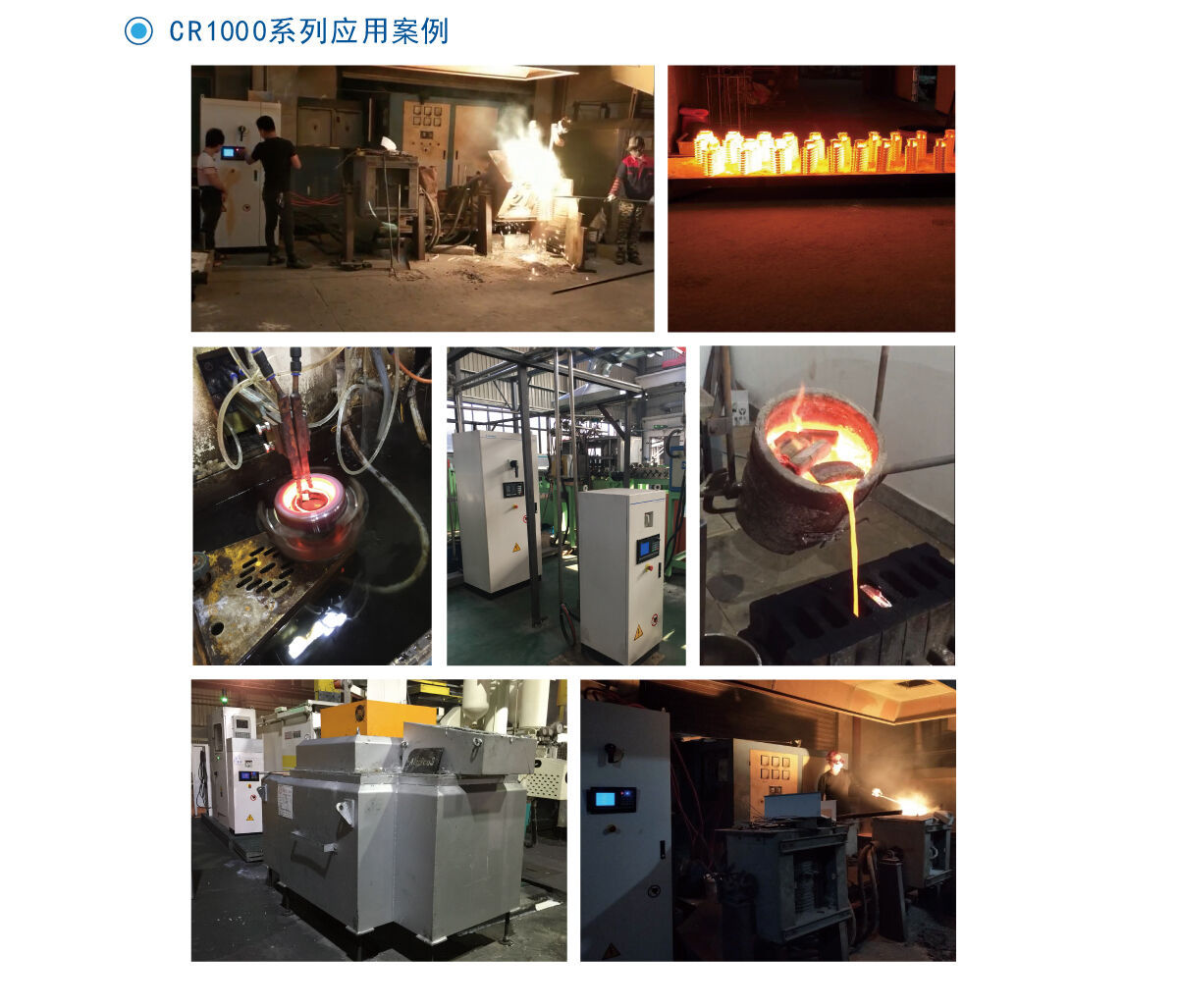
Material and Part Size
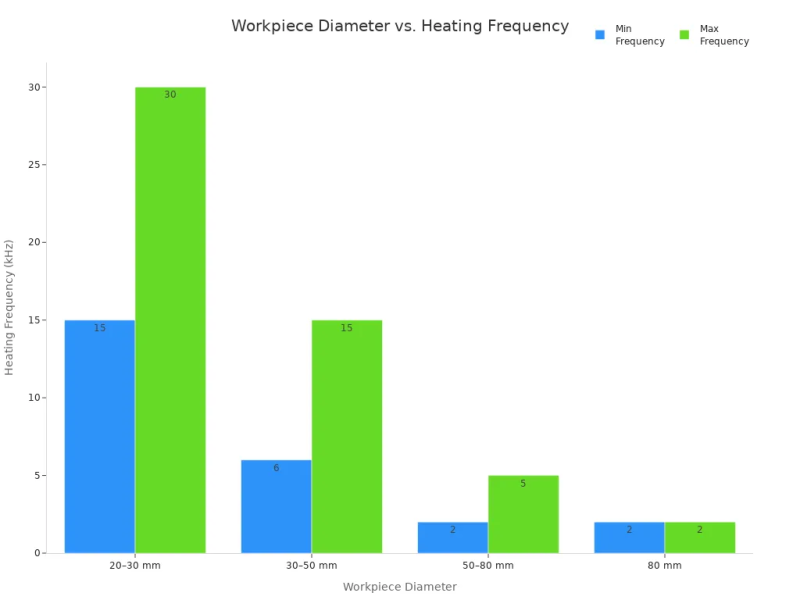
Think about what material you have and how big the part is before picking an induction forging heater. Different metals, like steel or aluminum, need special ways to heat them. The size of your workpiece changes which frequency you should use. Big parts need lower frequencies so heat goes deep inside. Small parts need higher frequencies for heating the outside.
Low frequency (1–10 kHz) is good for big billets and deep heating.
Medium frequency (10–50 kHz) works for general heating and thicker layers.
High frequency (over 50 kHz) is best for small parts or shallow hardening.
Here is a table that shows which heating frequency matches with workpiece diameter:
Production Volume
Match your induction system to how much you want to make. If you make a lot, you need a heater that works all the time and saves energy. If you make only a few, pick a small system with easy controls. Modular designs let you change your setup if you need more or less.
Heating Speed and Temperature
Heating speed and temperature are important for good forging. Fast heating needs more furnace power and higher frequency. You must reach the right temperature to stop strain hardening and make the metal easier to shape. Heating above the re-crystallization temperature lowers yield strength and removes pores in the metal.
Here is a table that shows the best ranges for different workpiece sizes:
You can make your forged parts better by controlling the temperature during induction heating. The heat from plastic work changes the temperature and affects how the part turns out.
Selection Criteria for Induction Forging Heater
When you pick an induction forging heater, you need to think about a few things. Your heater should fit your forging needs and keep things safe and easy. In 2026, new heaters have smart controls, modular parts, and use less energy. These features help you get more from your equipment.
Power Output
You need a heater with enough power for your metal pieces. Power output tells you how fast and deep the heater can warm metal. If you work with bigger or heavier parts, you need more power. Here is a table that shows power output ranges for different frequency bands:
If your heater does not have enough power, it will not heat fast or hot enough. If it has too much power, you waste energy and money. Always match the power to your part size and how much you make.
Frequency Range
Frequency is important too. It controls how heat goes into the metal. You need to pick the right frequency for your metal and part size. Here is a table that shows which frequency works best for different metals and jobs:
Medium-frequency is good for tempering, annealing, and big parts.
High-frequency works best for hardening, brazing, and small parts.
Frequency also changes how much energy you use and how even the heating is. Look at this table to see how different frequencies affect energy and heating:
Pick a frequency that gives you even heat and saves energy.
Coil Design and Compatibility
The coil heats your metal. In 2026, coils are better than before. New coils have special shapes and materials to heat faster and more evenly. Some coils have multi-zone heating for better temperature control. Others use smart electronics and controls for exact heating.
Here is a table that shows new coil features:
Check if the coil fits your part size and shape. Modular coils let you switch coils fast for different jobs. This saves time and helps you work with new products.
Tip: Choose induction systems with smart controls and multi-zone coils. These features help you keep the right temperature and make better forged parts.
Energy Efficiency and Safety
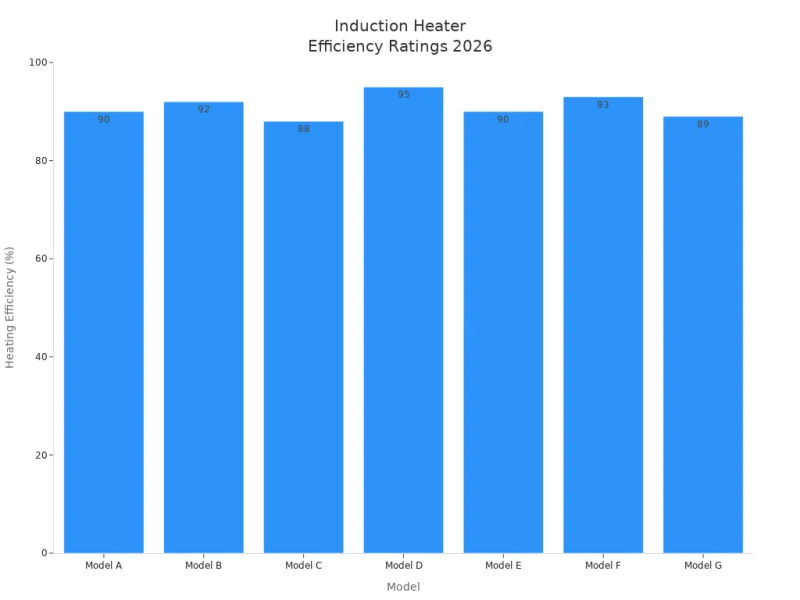
Energy efficiency is very important. You want a heater that uses less electricity but still heats well. In 2026, many heaters are over 90% efficient. Here is a table that compares different models:
Safety is just as important as saving energy. New induction forging heaters have many safety features. Look for risk checks and safety documents. Safety systems like PLCs and stop buttons keep your equipment safe. Guards and access controls protect workers during repairs. Regular checks and maintenance help stop accidents.
Here is a table of safety features:
Note: Always check what induction heater vendors offer. Good vendors give strong safety features and clear documents.
2026 Trends: Smarter Controls and Modular Systems
In 2026, induction forging heaters use smarter controls and modular parts. You see solid-state electronics, programmable controls, and digital tools. These features help you set up systems faster, save energy, and keep things steady.
AI and machine learning make heating better.
Automated solutions help your system work well.
Modular designs let you change your setup quickly.
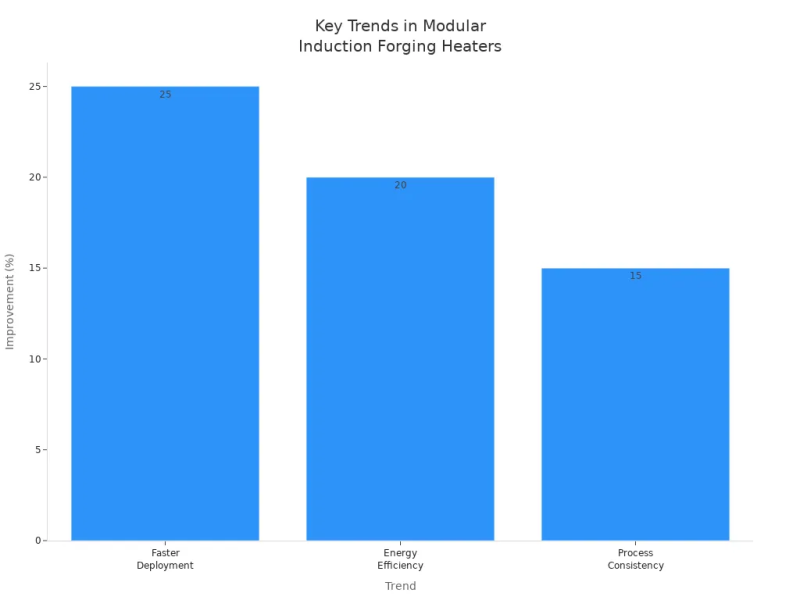
You get faster setup, better energy use, and more steady results. These new trends help you stay ahead and make your forging safer and greener.
Comparing Induction Forging Heater Models
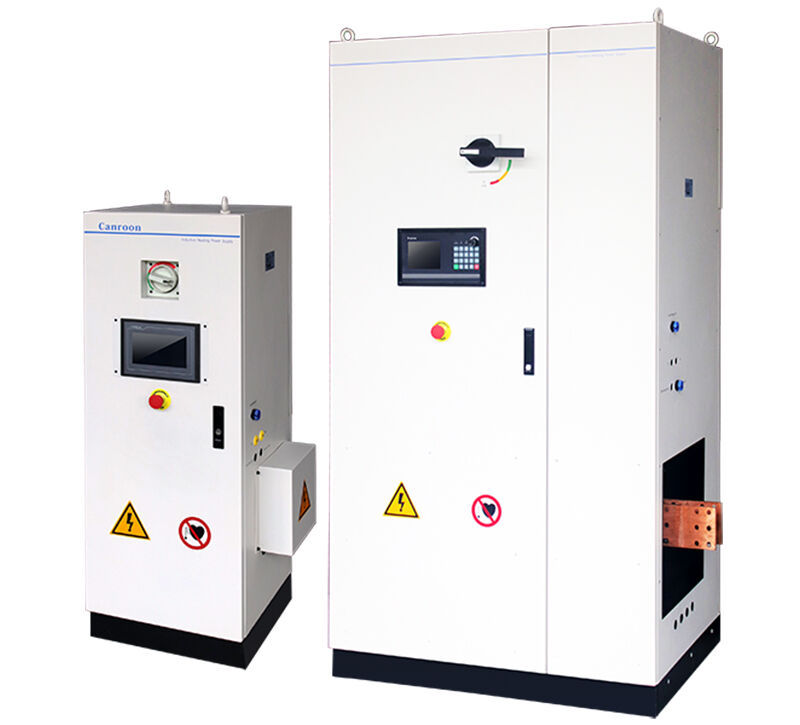
If you want to pick the best induction forging heater, you should look at different models together. This helps you find the one that fits your needs and gives you the most for your money. You can use a checklist, check how well each model works, and look at special features for billet heating systems. Many companies, like Canroon, have models with new options.
Model Checklist
Start by making a checklist to compare models. The table below shows what you should think about when picking a heater for your forging work:
Tip: Use this checklist when you look at models from Canroon and other companies. It helps you see what is most important for your business.
Performance Metrics
You need to check how well each heater works in real life. These checks show if the heater does a good job. Here are some things to look at:
How the temperature changes across the part
How the heat spreads on the outside and inside
If the process stays steady
Also, look at these features:
Power
Frequency
Heating efficiency
Weight
Size
Cooling type
How the temperature spreads
Energy efficiency
Less decarburization and scaling
Each thing helps you know how the heater will work in your shop. For example, if the heater controls temperature well, your parts will be better. If it heats well, you spend less on electricity. If the process is steady, you waste less and stop less.
Note: Always ask the company for real test results. This lets you see how the heater works before you buy it.
Billet Heating System Features
New billet heating systems have special features that make forging easier and more dependable. You can find these features in models from top companies. The table below shows what to look for:
You also get these good things:
The workpiece stays at the same temperature for even heating
Fast cycles and quick temperature changes
Less scale and surface decarburization
Tools last longer
The system can turn off zones to save energy when not in use
Modern billet heating systems use software and optical pyrometers to watch the temperature all the time. These tools help you see the heat profile and keep records for every part. This makes sure every piece meets your quality needs.
Callout: When you compare models, pick systems with smart controls and temperature checks. These features help you get better results and save money in the long run.
Evaluating Induction Heater Companies
When you pick an induction forging heater, look at the company too. A good company gives you more than just the machine. You get help, advice, and support when you need it. Here are ways to check induction heater companies, like Canroon.
Support and Expertise
You want a company that knows new technology and can help you fix problems. Some companies make custom solutions for your needs. They also give strong support after you buy and follow safety rules. The table below shows what to look for:
Tip: Ask for reviews from other clients. Check if the company has energy-saving designs.
Reputation and Warranty
A good reputation means you can trust the company. Good companies stand by their products with clear warranty plans. Look for companies that cover problems for a set time. The table below shows what to check:
You can feel sure when you pick a company with a good name and strong warranty.
After-Sales Service
After you buy your heater, you need help to keep it working well. Top companies like Canroon offer many services:
Help with setup and installation
Training for your workers
Fast repairs and maintenance during the warranty
Service after the warranty for a fee
Free or cheaper spare parts
Help with any machine problems
Note: Good after-sales service keeps your heater working and cuts downtime.
When you compare companies, look at their support, reputation, warranty, and service. This helps you pick a partner who will help you for years.
Cost and Value
Purchase vs. Operating Costs
You need to think about two kinds of costs. First, there is the price to buy the induction forging heater. This includes the machine, setup, and installation. Second, you have to pay to run the heater every day. These costs are for electricity, water, and workers. Newer heaters use less energy, so you spend less each month. If you pick a high-efficiency model, your bills will go down over time. You should also think about what happens if your heater breaks. If your heater is reliable, your work does not stop and you do not lose money.
Tip: Do not just look for the cheapest heater. A low-cost heater might cost more to use and fix.
Maintenance and Reliability
Taking care of your induction forging heater is important. Regular care helps stop problems and keeps your heater safe. Here are some things you should do:
Check the heater often to make sure it works well.
Clean the heating coils so they heat better.
Look at the cooling water system so the heater does not get too hot.
If you do these things, your heater will last longer and work better. Reliable heaters break less and give you good results. You can plan your work better when you do not have surprise problems.
Long-Term ROI
You want to know if your money is well spent. You can check long-term return on investment (ROI) with some key numbers. The table below shows how you can see the value of your heater over time:
A good induction forging heater can give you a strong return. High efficiency, easy care, and steady work help you get your money back faster. Use these numbers to compare heaters and pick the best one for your business.
Application Fit Scenarios
Automotive Forging
Induction forging is used a lot in making car parts. This method uses electromagnetic induction to heat metal billets. These billets are shaped into strong parts for cars and trucks. Induction forging helps make parts that must be the right size and very strong.
Induction heaters are used to harden shafts, gear teeth, sprocket teeth, and camshafts.
They also harden ball head surfaces, fork teeth, brake pads, and chains.
You can make engine, transmission, suspension, and steering parts.
If you work with car parts, you need a heater that gives steady heat every time. You want smart controls to keep the temperature just right. You also need a system that can handle lots of parts and does not use too much energy.
Tip: Pick a heater with smart controls and high speed for car parts. This helps you meet quality rules and save energy.
Small Batch Production
Small batch production is different from making lots of parts. You may only make a few parts at once. Your work may stop and start many times. You do not need a big or very strong system. You want a heater that is easy to use and quick to set up.
Here is a table that shows the difference:
If your heater is too strong, you waste money. If it is too weak, your work will be slow. Always pick a heater that matches your batch size and how you work.
Choose your heater for your job.
Do not use a system that is too strong or too weak.
Specialty Alloys
Specialty alloys are harder to work with. You must keep the metal clean and free from oxides. Oxidation can make you lose important parts of the alloy. This can change how the part works. You need to control the temperature very closely. Some alloys melt or join only in a small temperature range.
Keep the metal clean for good joining.
Watch for oxidation when heating.
Use heaters that control temperature very well.
If you work with specialty alloys, pick a heater that gives exact heat and keeps the metal safe. This helps you make strong and high-quality parts every time.
Note: Specialty alloys need careful work. Use a heater with smart controls to stop problems.
When you choose an induction forging heater, match its features to your needs for the best results. Use a checklist to compare models and talk with trusted companies like Canroon. Focus on these key points:
Check technology for fast heating and energy savings.
Make sure the system fits different materials and sizes.
Look for options that grow with your business.
Think about total cost, not just the price.
Pick vendors with strong support and a good reputation.
These steps help you succeed now and in the future.
FAQ
What is the best frequency for heating large metal parts?
For big metal parts, use low frequencies like 1 kHz to 5 kHz. Low frequency lets heat go deep inside the part. This helps the whole part get hot evenly and saves energy.
How do smart controls improve induction forging heaters?
Smart controls make it easy to set and watch the temperature. You can change the heat fast if you need to. These controls help you use less energy and keep parts at the right heat.
Can I use one induction heater for different metals?
One heater can work for many metals if you can change power and frequency. Make sure the coil fits the metal you want to heat. Flexible heaters are good for shops with many types of metal.
What safety features should I look for in 2026 models?
Find heaters with safety PLCs, emergency stop buttons, and guards. New heaters also check for risks by themselves and have clear safety papers. These things help keep you and your team safe when using or fixing the heater.
Previous:
Next:
Sign up for updates