





You need to pick the best induction heating machine for your job. First, find out how many kW your induction heating machine needs. Use an easy formula to guess the power for your induction heating machine. Always look at the material, size, and coil design before picking your induction heating machine. Frequency is important for every induction heating machine, so do not forget about it. If you are not sure, trust Canroon’s experts to help you not make common induction mistakes.
Key Takeaways
Find out what material your workpiece is made of and how big it is. This helps you know how much power you need. Different materials need different amounts of energy.
Use the power formula to figure out how many kW you need for your induction heating machine. Good calculations help you pick the right machine.
Change your power numbers to include efficiency losses. This makes sure you get a machine that really fits your heating needs.
Talk to experts for advice that fits your situation. They can help you not make common mistakes and make your induction heating work better.
Think about what you will need in the future. Pick a machine that can handle more work as your business grows. This helps you not spend extra money on new machines later.
Induction Heating Machine Sizing Factors
Material and Size
You need to check the material and size first. The material changes how much power you need. Steel, copper, and brass are not the same. Steel needs more power to get hot. This is because steel has high magnetic permeability. Copper and brass need less power. Their permeability is lower. Bigger workpieces need more power from the machine. If you pick the wrong size or material, you might waste power. You also might not get the results you want.
Frequency and Power Range
Frequency changes how heat moves in the workpiece. The skin effect makes high frequencies heat the surface. Low frequencies heat the whole part. You use different frequencies for different jobs:
Low frequencies (50 Hz to 10 kHz): Good for big parts.
High frequencies (10 kHz to 400 kHz): Good for surface jobs and soldering.
You need to match frequency and power to your job.
Coil Design and Coupling Distance
The coil design helps the machine work well. The space between the coil and workpiece is called coupling distance. This space changes how much power you need. Look at the table for common coupling distances:
If the coil is too far, you need more power. If it is too close, the coil can get too hot.
Application Requirements
Check what your job needs before you start. Do these steps:
Pick the material you will use.
Measure your workpiece.
Set how many you want to make each hour.
Choose the final temperature you need.
If your job is hard, Canroon’s team can help you. They can help you pick the right coil, power, and supply.
Power Calculation Steps for Induction Heating
Gather Application Data
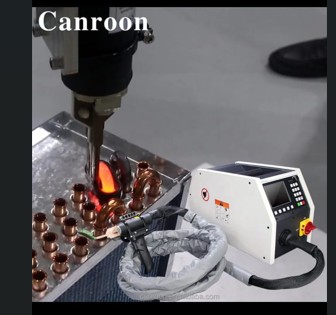
You need to start with the right data before you size your induction heating machine. Write down the type of material you want to heat. Measure the size and weight of your workpiece. Decide how many pieces you want to heat each hour. Set the starting temperature and the final temperature you want to reach. These numbers help you choose the right power for your induction heating system.
Tip: Accurate data makes your calculation more reliable. If you guess, you might pick the wrong machine.
Use the Power Formula
You can estimate the power you need for induction heating with a simple formula. The formula looks like this:
Power (kW) = (Mass (kg) × Specific Heat (kJ/kg°C) × Temperature Rise (°C)) / (Heating Time (seconds) × 0.277)
Let’s look at a real-world example. You want to heat a steel rod that weighs 5 kg. The specific heat of steel is about 0.5 kJ/kg°C. You want to raise the temperature by 600°C in 5 minutes (300 seconds).
Mass = 5 kg
Specific Heat = 0.5 kJ/kg°C
Temperature Rise = 600°C
Heating Time = 300 seconds
Plug these numbers into the formula:
Power = (5 × 0.5 × 600) / (300 × 0.277)
Power = (1500) / (83.1)
Power ≈ 18 kW
You need about 18 kW for this job. This is a basic estimate. You will adjust this number for induction heating efficiency in the next step.
Adjust for Efficiency
Not all the power from your induction heating machine goes into the workpiece. Some energy is lost in the cables, coil, and air. You must adjust your calculation for induction heating efficiency. Most induction heating systems have an efficiency between 0.8 and 0.9. Thermal efficiency usually falls between 0.7 and 0.9. If you use a well-designed coil, you can get better results. Multilayer windings often help when you heat nonferrous metals.
To adjust for efficiency, divide your power result by the efficiency value. For example, if your calculation gave you 18 kW and your system has 80% efficiency (0.8):
Adjusted Power = 18 kW / 0.8 = 22.5 kW
You should choose a machine that can deliver at least 22.5 kW. This step helps you avoid under-sizing your induction heating equipment.
Check Technical Details
Before you buy or set up your induction heating machine, check these technical details:
Power supply: Make sure your power supply can give enough high-frequency current for your job.
Induction coil: Use a coil with the right design and enough cross-sectional area. Copper tubing or solid copper works best.
Cooling system: Pick a strong cooling system to keep your machine safe and steady.
Coil materials and structure: Choose the right materials and shape for your coil. This helps reduce losses and improves current flow.
Coupling gap: Keep the gap between the coil and workpiece between 5–15 mm. A big gap lowers efficiency.
Number of coil turns: More turns lower the frequency and increase coil current. Adjust this for your application.
Note: Always check the frequency and power specs for your induction heating system. The right frequency gives you the best heat pattern and saves energy.
You can use simulation tools to test your setup before you start. Simulation helps you see how your induction heating system will work. You can change the coil design, power, and frequency in the simulation. This lets you find the best setup without wasting time or energy.
Induction Heating Application Examples
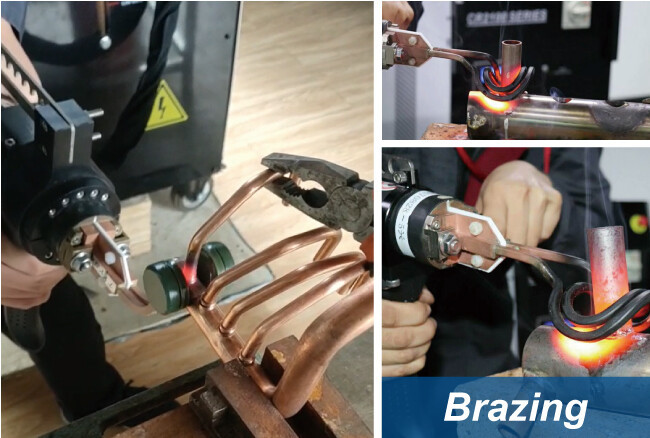
You can use induction heating in many areas of manufacturing. Each application needs a different amount of power. You must know the typical kW range for your job. Canroon’s quick reference table helps you choose the right machine.
Brazing
Brazing joins metals using heat and filler material. You use induction heating to make the process fast and clean. Most brazing jobs need 5 kW to 30 kW. Small parts use less power. Large parts or thick metals need more. You get strong joints and save time.
Tip: Use a well-designed coil for even heat. This gives you better results in brazing.
Forging
Forging shapes metal by heating and pressing. Induction heating gives you quick and controlled heat. You usually need 30 kW to 200 kW for forging. The size of your workpiece decides the power. Heavy steel bars need more kW. You get uniform heat and less waste.
Heat Treating
Heat treating changes the properties of metal. You use induction heating to harden, soften, or temper steel. Most heat treating jobs need 10 kW to 150 kW. You control the heat and get repeatable results. Induction makes the process safe and efficient.
Shrink Fitting
Shrink fitting uses heat to expand metal parts. You use induction heating to make assembly easy. Most jobs need 3 kW to 50 kW. Small gears use less power. Large shafts need more. You get tight fits and strong connections.
Canroon’s experts help you pick the right induction heating machine for your manufacturing needs. You can use their quick reference table to check the kW range for your application.
Induction Heating System Sizing Tips
Avoid Under- or Over-Sizing
You want your induction heating system to work well. If you pick a machine that is too small, it will not heat your parts fast enough. If you choose one that is too big, you waste energy and money. Many people forget to check the coil alignment or the power supply. You should always:
Check that the coil fits around your part.
Make sure the induction power supply matches your job.
Monitor the temperature with a thermometer or infrared camera.
These steps help you avoid common mistakes and keep your process safe.
Consult with Experts
You do not have to solve every problem alone. Experts can help you find the best solution for your needs. Canroon offers many services to help you:
Use an induction heating calculator for basic sizing.
Get a custom coil design for your special parts.
Follow a coil troubleshooting guide if you have heating issues.
Ask for an application evaluation to match the right machine to your job.
Learn why the right inductor makes your heating more efficient.
You save time and get better results when you talk to experts.
Plan for Future Needs
Your production may grow. You might need to heat bigger parts or more pieces each hour. When you size your machine, think about what you will need later. Choose a system that can handle more work if your needs change. This helps you avoid buying a new machine too soon. Good planning keeps your shop running smoothly and saves money in the long run.
Tip: Always review your process and update your equipment as your business grows.
You can size your induction heating machine by following these main steps:
Design the coil to fit your part and process.
Optimize the coupling for better heat.
Check your facility’s cooling and space needs.
Decide if you need temperature monitoring.
Use expert advice for special jobs.
Always look at the metal type, thickness, and power output. These factors help you get the best results. If your job is unique, reach out to Canroon for expert help. Use these guidelines to choose the right machine for your needs.
FAQ
How do you estimate the power for an induction heating machine?
You use a simple formula to find power. First, multiply mass, specific heat, and temperature rise. Then, divide by heating time. After that, adjust for efficiency. This gives you a good starting point.
What factors affect induction heating efficiency?
You need to look at coil design, coupling distance, and material type. These things change how much heat goes into your workpiece. A good coil design makes efficiency better.
Can you use induction heating simulation for machine sizing?
Yes, you can use simulation to test coil designs and power settings. Simulation lets you see how your system works before you build it.
What is the best frequency for surface heating?
You should use high frequencies from 10 kHz to 400 kHz. High frequency heats the surface quickly. Low frequency works better for bigger parts.
How do you avoid under-sizing your induction heating machine?
Always check your application data. Pick a machine with enough power for your job. Plan for future needs so your machine can handle more work.
Previous:
Next:
Sign up for updates