




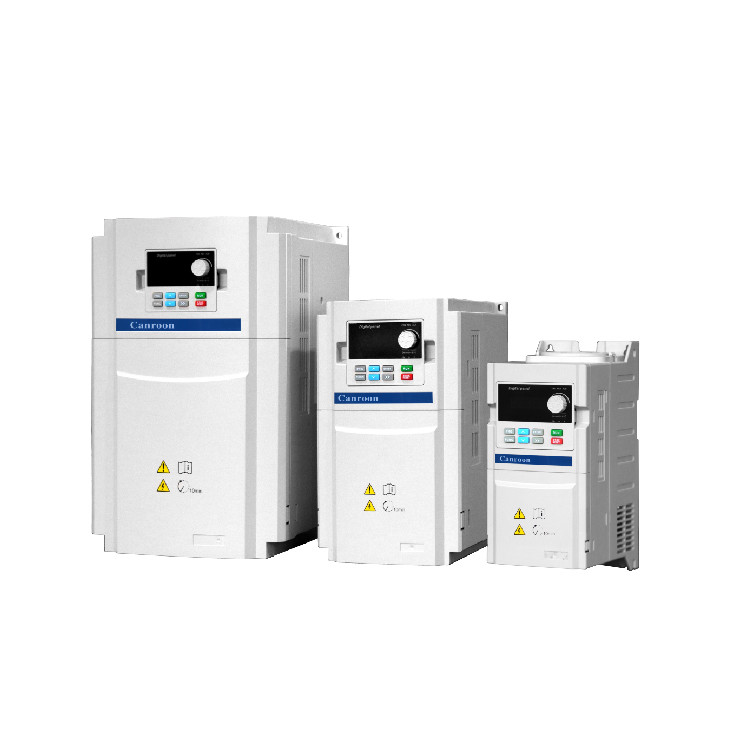
Procurement teams buying a VFD for pumps or HVAC fans care about three things: stable pressure or airflow, predictable energy savings, and reliable delivery with the right certifications. This review looks at the Canroon CV900N Series High Performance Vector VFD through that lens for projects across the Middle East, Southeast Asia, India, and North Africa.
Disclosure: This review is produced by Canroon. We follow an evidence tier system. Tier 1 facts come from official documents. Tier 2 results require hands-on tests. Where tests are pending, we mark claims as Insufficient data.
Quick buyer summary
Built for precise motor control with vector control up to high frequencies, suitable for pump and fan duty in buildings and utilities. Tier 1: see the CV900N product page in the link below.
Designed for constant pressure use when paired with a pressure transducer and PID control. Public page indicates pump suitability; detailed PID wording is to be confirmed in the catalog. Tier 1 pending: catalog confirmation.
Thermal design focuses on stable operation with independent air ducting and long-life fans, relevant for hot climates. Tier 1: product page.
Integration expectations for BMS and PLC via Modbus RTU over RS-485 are typical in this class. CV900N catalog confirmation recommended before purchase order. Tier 1 pending: catalog.
Value angle for procurement: energy savings from variable speed vs throttling, soft start to reduce mechanical stress, and potential payback in regions with mid to high tariffs. Tier 2 data pending tests.
What the CV900N is and why it matters for pumps and HVAC
The CV900N is Canroon’s high performance vector control drive positioned for a wide range of industrial applications, including pumps and fans. The official page highlights vector control precision, stable low frequency torque, and thermal design that helps the unit run cooler under continuous duty. See details on the CV900N product page via the link: CV900N product page.
If you’re shortlisting a VFD for pumps, constant pressure control is the core job. In typical booster or chilled water systems, the drive modulates motor speed so the discharge pressure stays near the setpoint as demand rises and falls. A variable frequency drive reduces wasted energy caused by throttling a fixed-speed pump and makes starts and stops gentler. For readers who want a refresher on fundamentals, see how a variable frequency drive regulates motor speed in our primer: how a VFD works. For pump and HVAC context, this overview shows where drives cut energy and improve control: VFDs for pumps and HVAC.
From a procurement point of view, the headline questions are straightforward: Does the CV900N provide stable constant pressure in pump service, can it be commissioned quickly, and does it integrate cleanly with your BMS or PLC? As of this writing, the public product page confirms pump suitability and vector control capabilities. Built-in PID, pump macros, and sleep or wake functions are typical in this category but should be verified in the CV900N catalog from the Download Center. Tier 1 confirmations in that catalog will matter for formal specs and submittals.
VFD for pumps: control and energy in constant pressure service
For pump and fan systems, the control loop quality determines comfort and wear. With a solid pressure transducer and correct tuning, a VFD for pumps should hold a steady setpoint, avoid hunting, and recover quickly from sudden valve or demand changes. Canroon positions the CV900N’s vector control for precise low-speed behavior, which is often where pumps suffer from instability. Tier 1: see the CV900N product page. As a vector control drive, the CV900N aims to keep torque stable even at low Hertz, supporting smooth restarts after transients.
Energy use follows familiar pump affinity laws. Slowing a centrifugal pump even a little drops power significantly. That’s why a variable frequency drive can pay back fast in systems that rarely run at peak demand. For a brief buyer-focused explainer on where the savings come from, see our pump-focused guide: VFDs for pumps guide.
What to confirm before you buy:
PID toolkit: Verify built-in PID control parameters, deadband, anti windup, and any pump macros. Tier 1 pending: catalog confirmation.
Ramps and soft start or stop: Check that acceleration and deceleration ramps can be tuned for the pipe network to minimize water hammer. Tier 1 pending: catalog confirmation.
Sleep or wake and minimum speed: Ensure the drive can sleep at low demand and wake cleanly when pressure falls. Tier 1 pending: catalog confirmation.
Trip immunity: Review protection functions for overcurrent, overvoltage, and dry run detection options if applicable to your application. Tier 1: product page indicates a protection focus; consult catalog for specifics.
When lab data are available, we’ll add step response plots and kWh tables to quantify stability and savings. Until then, procurement teams should rely on Tier 1 documentation and request application notes or parameter snapshots for constant pressure use.
Integration and commissioning for BMS and PLC
Most projects in the regions we focus on use Modbus RTU over RS-485 for setpoints and feedback. The CV900N series is commonly deployed in such contexts, but buyers should confirm the communication ports, default baud rates, and available register maps in the catalog or manual. Tier 1 pending: catalog confirmation.
Commissioning expectations:
Time to first run: A practical benchmark is achieving stable pressure control within one site visit with a simple parameter wizard or macro.
Parameter portability: A keypad copy or clone function reduces labor on multi-drive pump skids.
Electrical fit: Ensure the CV900N voltage class matches the local supply standard (typically 380–415 V in many MENA and APAC sites) and review any derating curves for hot plant rooms.
If your project requires BACnet or advanced fieldbus options, confirm availability before freezing the bill of materials. Some competitor models bundle broader protocol suites; the CV900N’s default focus is Modbus RTU, with other protocols subject to confirmation.
Comparison at a glance
Below is a neutral, procurement-style snapshot using matched criteria and official sources. Items marked to confirm indicate fields that typically appear in catalogs.
Who should buy and who should not
Buy CV900N if you are deploying a VFD for pumps or HVAC fans and you value precise low speed behavior, straightforward Modbus RTU integration, and a thermal design suited to warm mechanical rooms. Municipal boosters, building chilled water or condenser water pumps, and cooling tower fans are typical fits across MENA, SEA, India, and North Africa.
Consider other options if the project mandates a specific fieldbus like BACnet MS or TP out of the box, or if your site needs a sealed, washdown-rated enclosure such as IP66 or UL Type 4X. In those cases, competitors like the Danfoss FC 102 or ABB ACS580 4X are common alternates with published outdoor or washdown variants.
Regional procurement notes
Voltage and power classes: Many sites in the Gulf, India, and Southeast Asia run 380–415 V, 50 Hz for pump and fan motors. The CV900N’s voltage class aligns with these grids. Tier 1: product page note on voltage class.
Certifications and documentation: The Canroon site indicates CE context and ISO 9001 for quality management at a company level. For project submittals, request the CV900N catalog and any applicable EMC or safety standards references. Tier 1: confirm via catalog and manuals.
Lead times and warranty: These vary by distributor and region. We recommend obtaining written lead time ranges and warranty coverage in months or years for your specific kW ratings. Insufficient data for a single global figure.
Tariff and payback: Electricity tariffs vary widely. Model payback with your energy team using measured duty cycles rather than generic assumptions. We will publish examples once Tier 2 kWh logs are available.
Limitations and open questions
Fieldbus scope beyond Modbus RTU requires confirmation. If your BMS specification mandates BACnet without gateways, check options early.
Enclosure rating and dust or moisture protection need catalog confirmation for harsh or outdoor sites.
Public documentation currently doesn’t list a dedicated constant pressure macro on the product page. It’s a common feature in this class, but procurement should verify in the CV900N catalog before issuing final POs.
FAQ
Q: Is the CV900N a good VFD for pumps in HVAC booster or chilled water duty? A: Yes, it’s positioned for pump and fan applications and offers vector control suited to steady pressure control when paired with a pressure transducer. Tier 1: see the official product page. For exact PID and macro details, confirm in the catalog.
Q: How does it compare with an HVAC fan VFD from a legacy brand? A: The Danfoss FC 102 and ABB ACS580 families are strong, widely specified options with broad BMS protocol packages and enclosure variants. The CV900N’s value proposition centers on precise vector control and expected pump features at competitive cost, with Modbus RTU integration as a baseline. Choose based on protocol needs, enclosure requirements, and price or lead time.
Q: Can a solar pump inverter replace a standard VFD here? A: Not directly. A solar pump inverter targets PV-driven off-grid or hybrid pumping. For grid-tied building HVAC and municipal boosters, a standard variable frequency drive with constant pressure control is the right tool. You can, however, compare options if your project includes hybrid energy sources.
Verdict
For procurement teams, the Canroon CV900N is a credible shortlist candidate as a VFD for pumps and HVAC fans in the target regions. Tier 1 documentation confirms vector control capability, pump and fan suitability, and a thermal design that favors continuous duty. To finalize a purchase decision, request the CV900N catalog to confirm PID and pump macro details, enclosure ratings, and protocol options, and—if possible—ask for a parameter sample for constant pressure service.
If you need more than Modbus RTU out of the box or you have strict enclosure requirements, weigh Danfoss FC 102 and ABB ACS580 variants using the same criteria.
Looking for specifications, regional availability, or to request the catalog? Visit the official CV900N product page.
Sign up for updates